Black metal’s raw, untamed sound often conjures images of windswept mountains, ancient forests, and frozen landscapes. This connection to nature, however, transcends mere aesthetics. It delves into a complex relationship with the natural world that breathes through the genre’s themes, lyrics, and overall atmosphere. Black metal explores an ancestral relationship with the natural world, often intertwined with paganism and a profound sense of misanthropy, representing a shadow cast against the blinding light of new, perceived “false gods.”
Black metal’s affinity for nature is abundantly apparent, manifesting most notably through its imagery and lyrical themes. Album covers frequently depict mountains and forests, and countless band photoshoots are set within wild landscapes. Beyond openly and literally writing about the landscape, the music often delves into themes of isolation and solitude, mirroring nature’s vastness and indifference. This isn’t simply about picturesque scenery; in many cases, it reflects a deep yearning for an era where humanity existed in closer harmony with the environment. Through ancient ideologies, deities embodying natural elements like trees and mountains were worshipped. This connection to branches of paganism signifies a rejection of the modern world, fueling a further fascination with pre-Christian beliefs and practices. For many artists and fans, nature and the spiritual connection it represents provide a catharsis: a way to connect with something larger than ourselves and a confrontation of our primal emotions. Nature’s stark beauty and unforgiving power, echoing forces revered by ancient cultures, resonate with the genre on a much deeper level.
The Roots of Expression: Kildonan and the Scottish Landscape
This profound connection is exemplified by bands like Kildonan, a Scottish black metal act whose sound is intrinsically tied to the rugged landscapes of their homeland. To delve into this deep relationship, we spoke with Hamish, the sole creator behind Kildonan, about the origins and evolution of his artistic expression.
0: “Kildonan’s music clearly comes from a specific place. Can you tell me about the beginnings of the band? Was this particular artistic expression something you always envisioned, or did it evolve over time? There’s a note on your Bandcamp page that Kildonan is a continuation from Vostok. Can you elaborate on the connections between the two projects? What did you carry over, and what did you intentionally leave behind? Was there a specific reason for the change?”
Hamish: “I started getting into black metal around the turn of the millennium. Shortly after, I was playing in an instrumental post-rock band and an extreme doom band. Both these genres have specific elements I really identify with, but I increasingly became drawn to black metal as a medium for my musical expression. Something about the atmosphere and primal energy really connected with me and seemed to resonate with a lot of the issues that inspired me to write. As you mention, Kildonan is a continuation of my previous solo-project, Vostok. Vostok was primarily concerned with human nature, though the themes were explored through elements of Highland history. It took its name from the untouched ecosystem beneath Lake Vostok – a rare example of human restraint. However, with the drilling of the ice sheet in 2012, combined with the project becoming increasingly focused on the history and landscape of the Scottish Highlands, it became apparent that a change in name was required.”
This shift in identity underscores the immediate and deeply personal connection many black metal artists feel with their surrounding environment. Hamish continues, highlighting the specific regional ties that solidified the new direction:
Hamish: “When choosing a new name it made sense to choose somewhere I have a strong connection with. My father’s side of the family lived in and around the Strath of Kildonan and were amongst the families forcibly evicted from those lands during the Clearances of the 19th Century. At the time, a form of feudalism existed which survives, in some form, to this day. The Duke of Sutherland, like the majority of Scottish landowners, came to value sheep more than the people that inhabited the land and they were evicted to Clearance Villages on the coast such as Helmsdale and Badbea. Due to such upheaval, many decided to leave Scotland entirely and left for the New World – many settling in New Zealand and Canada. Part of my family still own the Croft my family built after being cleared to Helmsdale and I often visit the area.”
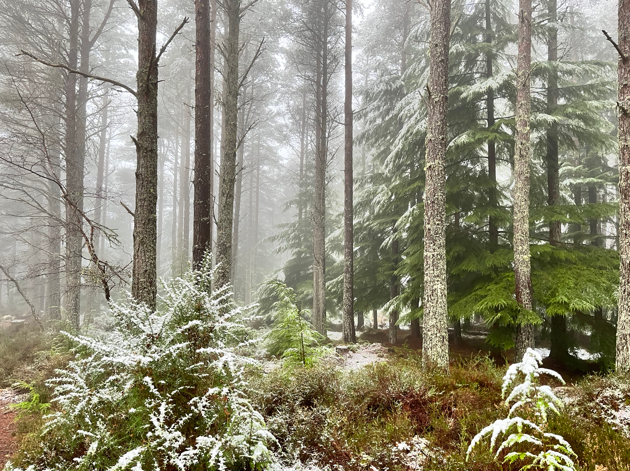
His deep family history, intertwined with the dramatic and often tragic history of the Scottish Highlands, directly informs Kildonan’s thematic core. Hamish’s daily life further cements this bond: “the inspiration is primarily derived from the culture and history of this area but also the landscape. I work in forestry and am a keen hill-walker, spending much of my time in the hills, coastline and woodland of the area.”
He clarifies that the name change signified a natural evolution rather than an abandonment of past themes: “So nothing was intentionally left behind with the name change. It just reached a point where the relevance of the ‘Vostok’ name diminished to a point where I felt it needed to be replaced. Musically things have definitely changed over that time period but there’s never been a conscious effort to change, it’s been more of a gradual evolution.”
Regionalism and Thematic Depth
Beyond the specific Scottish context of Kildonan, black metal frequently explores a more literal connection with nature through the inclusion of folk elements. Drudkh, for example, weaves Ukrainian folklore and nature imagery into their music, creating a sound that captures the vastness of their homeland, reflecting a national identity intertwined with the natural world. Agalloch, incorporating elements of folk and post-rock, explores themes of nature and the human relationship with it, taking listeners from the emptiness of the Ukrainian countryside to the dense woodlands of the Pacific Northwest. Guitarist Don Anderson, speaking about The Mantle in 2002, noted the band was “thinking in images and how sound might express those images.” Fen, with their atmospheric post-rock, post-black metal sound, crafts immersive landscapes that capture the bleak beauty of the Fen’s region of England, evoking a strong sense of isolation. Kroda, another Ukrainian band, blends black metal with folk elements, drawing inspiration from Slavic paganism and its connection to nature, celebrating its power and majesty. These influences are deeply rooted in black metal, with even second-wave bands like Ulver (particularly their early work) and Darkthrone looking to nature. Ulver’s Bergtatt exemplifies folk-infused black metal celebrating the Norwegian wilderness, while Darkthrone, though often misanthropic, shows an appreciation for nature, using Norway’s frozen landscapes as both inspiration and metaphor.
These regional differences highlight how the genre’s connection to nature, while initially a deeply personal and location-specific experience, is also a universal concept. Each region’s unique environment and cultural history shapes how artists perceive and express their relationship with the natural world, resulting in diverse explorations. The Cascadian black metal scene, with bands like Wolves in the Throne Room, Agalloch, and Ash Borer, integrates the Pacific Northwest’s forests and mountains into their sound, evoking ecological and spiritual connections. Similarly, the emerging Appalachian black metal scene, with bands such as Panopticon and Nechochwen, draws from their region’s natural beauty and history, sometimes incorporating local folklore. Hamish further illustrates this regional influence and the inspirations behind Kildonan’s album, Embers:
0: “The production on Embers is awesome, creating a powerful and deep sound that contributes to a strong sense of melancholia. It’s not a depressive feeling, but more akin to anguish, a bleakness that’s really fucking captivating. I’m curious about the influences and intentions behind the album. What themes and ideas were you exploring? Building on what I said about that atmosphere of Embers, this album definitely has a distinct feel to it. What were the main inspirations behind this project, and how did they shape the sound and atmosphere we hear on this record? Musically is something that people like to know but what other, outside influences were there? The Highlands of Scotland clearly play a significant role in Kildonan’s identity. From the band name and track titles to the cover art, there’s a strong connection to the region’s raw and powerful nature. Was there a particular aspect of the Highlands you were aiming to capture or convey with this album? Are there any specific stories, myths, or historical events from the region that have inspired your creative process?”
Hamish: “I’m really happy with the production on the album and I’d thoroughly recommend Sonorous Studio to anyone thinking of recording metal or rock. From the recording through to getting the final mix, it’s always a pleasure working with Guillaume. He brings a lot to the table in terms of production – especially on the vocal front where we tried out various things during the recording. I think it’s hard not to have a sound with a melancholic and anguished edge when inspired by events as harrowing as the Clearances and the resulting diaspora. I guess that comes through in the music and is perhaps tempered by inspiration drawn from the landscape. Even the beautiful landscape much of the Highlands is known for is pretty depressing when you see how badly it’s managed by these large estates. Completely denuded of trees and wildlife for the sake of sheep or grouse.”
Hamish goes on to detail the broad spectrum of influences, illustrating how deeply interwoven his creative process is with his environment:
Hamish: “I mean there are the obvious musical influences – primarily drawn from the second wave black metal movement but supplemented with newer, dissonant death/black metal. Doom, especially death-doom and funeral doom bands such as Thergothon and Disembowelment, have had a huge influence on the project too. The other musical inspiration probably comes from post-rock/metal bands such as Isis and Neurosis and even a bit of neofolk such as Tenhi. I’d probably focus on the effects that immersing myself in the landscape has. Whether that’s hiking up a Munro or shore fishing on a remote headland – the landscape, signs of human habitation, now lost, and the recolonization of those places by nature is a powerful mix. Quite often that’s when riffs and song ideas will come into my head.”
Specifically regarding Embers, the historical and familial connections are paramount:
Hamish: “For Embers, the main source of inspiration was the areas in and around the Strath of Kildonan. I have a strong family connection to Loth, Helmsdale, Badbea, Navidale, Ousdale, and of course the Strath of Kildonan. My grandfather had a croft on the outskirts of Helmsdale that is now owned by my cousin. As a youngster, we spent almost all our holiday up there on the beaches, walking the coast, fishing and walking in the hills. The Bannerman side of my family were cleared to Ousdale, on the edge of Badbea, and visiting the ruins of that Clearance village had a real impact on me. My grandfather was extremely passionate about the Sutherland Clearances – he actually wrote a book about them that was never published and conducted extensive research on his family tree. It was fascinating and deeply saddening to see how families so rooted in place were forcibly evicted and cast both throughout Scotland but also to the far reaches of the planet. This passion for the subject was passed to my father and in turn to me. Aside from direct influence from my family, much of these subjects were further fed through books like James Hunter’s ‘The Making of the Crofting Community‘ and Andy Wightman’s ‘Who Owns Scotland? The Poor Had No Lawyers‘ – both essential reads.”
In contrast, the Greek black metal scene, while often focused on paganism and mythology, presents a different facet, with bands like Rotting Christ and Varathron often possessing a warmer, more melodic sound that can be subtly linked to the Mediterranean environment and ancient Hellenic narratives intertwined with nature. Even within the often raw and misanthropic French black metal scene of Les Légions Noires, a sense of desolate, rural landscapes can permeate the atmosphere, albeit often with a darker and more introspective tone. These regional variations demonstrate how the natural world inspires a wide spectrum of artistic expression within black metal.
Immersion, Spirituality, and Nuance
Indeed, immersing oneself in the soundscapes of bands like Moonsorrow (evoking the ancient, often melancholic landscapes of Finland), Paysage d’Hiver (transporting the listener to the stark, icy isolation of the Swiss Alps), or Véhémence (conjuring the rugged and mystical atmosphere of Brittany, France) can be a profound experience. The evocative sounds, combined with lyrics and imagery, create a sense of place that transports the listener to these windswept mountains and frozen landscapes. The use of atmospheric elements, such as ambient passages and nature sounds, further enhances this sense of immersion, allowing the listener to feel a profound connection to the natural world. The music’s intensity and emotional depth can evoke a sense of awe, wonder, and even fear in the face of nature’s power and vastness. At its roots, black metal can provide a cathartic release, a way to connect with primal emotions and experience a sense of spiritual transcendence through the raw power of the music. The genre’s ability to evoke such powerful emotional responses highlights its unique capacity to connect listeners with the natural world on a deeply personal level.
This connection to nature is further enriched by black metal’s engagement with and adoption of paganism and a more suggestive theology. Paganism, Odinism, Witchcraft, etc., with its reverence for the natural world and its pantheon of deities embodying natural forces, provides a rich philosophical backdrop that can help emphasize the ideas within the music. The appreciation of these themes and ideologies represents not only a rejection of Abrahamic religions, often perceived as detached from the earth, but also a symbolic reclamation of traditional ideas and a connection to a wilder past. Within black and extreme metal, the use of pagan and occult traditions and symbolism in an artistic sense can serve as a metaphor for the rejection of modern constraints and a call to connect with the more spiritual forces of nature.
Building upon this, the occult, in its deeper explorations, acts as a conduit for understanding some of the hidden dimensions of nature. It moves beyond superficial invocations to reveal the intricate web of unseen energies that some claim to perceive in the natural world. This understanding views nature not as a mere physical construct, but as a living, breathing entity with strong spiritual significance. Ancient esoteric traditions, much like the pagan beliefs they often intertwined with, centered on the veneration of natural elements, recognizing the apparent power within trees, mountains, rivers, and celestial bodies. The use of symbolism, rituals, and incantations serves as a way to tap into these natural energies, fostering a sense of communion and reverence – a deep attunement with the forces that shape existence. This exploration of the occult alongside nature becomes a way to express a spiritual experience that is both deeply personal and connected to the ancient world, a way to reclaim a lost connection. Black metal’s appreciation of these occult themes, and its integration of them into its own artistic expression, serves to further emphasize the genre’s deep-seated connection to nature and its exploration of the spiritual and primal forces that govern existence.
However, black metal’s relationship with nature is not without its complexities. While the genre frequently features nature imagery and themes, and while some within the scene may hold genuine environmentalist beliefs, the overall picture is more nuanced. The genre’s engagement with nature is often more romantic and spiritual than practical or political. Many bands focus on the aesthetic beauty and power of nature, particularly its wild and untamed aspects, rather than advocating for specific environmental policies or actions. The “return to nature” often expressed is more from a philosophical perspective than a literal call to abandon modern society. This distinction between artistic expression and direct activism is something Hamish addresses directly:
0: “Black metal often channels a powerful link with nature, and that connection resonates strongly with Embers. How would you describe Kildonan’s relationship with nature? How does this relationship manifest in your music, both in terms of sound and lyrical themes? Do you see a connection between the power of nature and the intensity of black metal music? Does Kildonan’s music explore any specific natural elements or phenomena that you find particularly inspiring or that you felt you captured in your sound?”
Hamish: “For me, black metal, especially the second wave, tapped into something raw and primal – which has obvious parallels in the natural world. When you listen to stuff like ‘In the Nightside Eclipse’, ‘De Mysteriis Dom Sathanas’, ‘Written in Waters’, ‘Min Tid Skal Komme’, etc., there is a real energy that is very rare in most genres, especially as they mature. Whilst a lot of the bands, at least superficially, seem to be inspired by Satanism and anti-religious sentiment, there’s also elements of paganism and a general reverence for nature that come through strongly. That reverence for nature has always been something that appeals, and bands that tap into that are often the bands I’ll seek out and enjoy the most. Having said that, there is definitely a proliferation of bands that say they’re inspired by nature but seem to spend all their time in the cities – only leaving for band photos in the nearest wood or hillside! For Kildonan, and me personally, the natural world is extremely important. I love the wildlife and landscape of Scotland and spend a lot of my weekends and holidays up in the hills or fishing stretches of the coastline.”
Hamish’s perspective reinforces the idea that for many artists, the connection is deeply personal and experiential, but it’s not without a critical eye on the current state of the natural world: “When immersed in the landscape, it gives an excellent opportunity to observe both the amazing diversity of flora & fauna, but also the vast damage we’ve done to the landscape. It’s impossible to overlook the awful muirburn practices of the big east coast estates, unplanned roads causing erosion, the maintenance of overly high deer populations, the deforested valleys and hillsides etc. the list sadly goes on. Both the positive and the negative are a source of inspiration for Kildonan though I’d like to see the latter banished to the past.”
Misanthropy, Solitude, and Hope
Further to this, some aspects of black metal’s relationship with nature, such as its focus on individualism and misanthropy, could be seen as conflicting with traditional environmentalist ideals. The connection to paganism, while significant, is often more focused on reclaiming a pre-Christian past and exploring themes of spirituality and identity than on promoting specific environmental causes. In short, black metal’s relationship with nature is multifaceted and often far more symbolic. While it can evoke a sense of awe and reverence for the natural world, and while some artists may hold genuine environmentalist beliefs, the genre itself doesn’t necessarily promote a specific environmental agenda. Its focus is more on exploring the complex relationship between humanity and nature, often through a lens of paganism, misanthropy, and a yearning for a more primal and authentic existence. It’s a complex artistic expression that uses nature as a source of inspiration, symbolism, and philosophical exploration, rather than a straightforward call to environmental action.
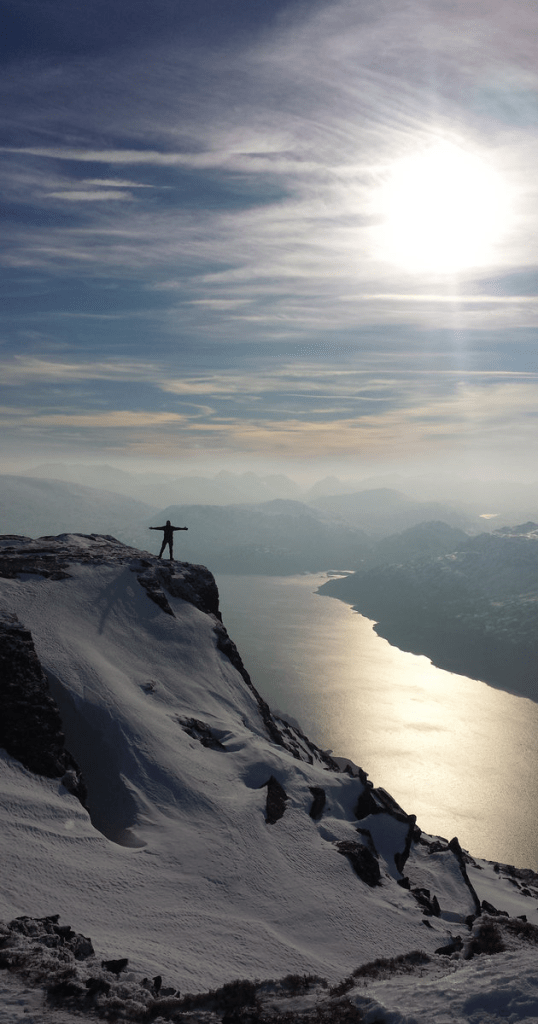
To add yet another layer to the already complex discussion, black metal’s embrace of misanthropy is not necessarily a condemnation of humanity’s actions, but rather a profound exploration of solitude within the overwhelming vastness of nature. This isn’t just about societal rejection as much as it is about seeking a full experience of the natural world’s power. This bleak isolation found in black metal mirrors the experience of standing alone before towering mountains, within the depths of an ancient forest, or amidst empty, rolling fields. In these moments, humanity’s presence feels insignificant, and the individual confronts the raw indifference of nature. This confrontation isn’t necessarily hostile; it is an acceptance of nature’s dominance, a surrender to its overwhelming character. The misanthropy and hatred in the music, in this context, become a form of solitary communion, a recognition of humanity’s small place within the grand scale of the natural world. It’s a willingness to be dwarfed, to be absorbed by the sheer scale and power of the landscape. Hamish offers his perspective on this often-misunderstood aspect of black metal’s ethos:
0: “There’s a feeling of isolation and solitude in a lot of black metal. I wondered with the vastness and remoteness of the Highlands, is that something you intentionally wanted to explore? Do you see your music as a form of expression that helps you connect with the natural world, or is it more of a personal exploration?”
Hamish: “I think the feeling of isolation and solitude in the Highlands specifically is something that should both sadden and anger us. The Highlands, like much of rural Scotland, should have a much higher population. The people were cleared and have been replaced by vast estates managed for deer or grouse, often owned by absentee landlords who seldom visit and do not have the land’s best interests at heart. It really riles me when I hear people talking about the untouched wilderness of the Highlands when in fact the majority of the landscape is an ecological desert borne of extremely poor land management. The sooner we break up these estates – potentially through the introduction of a land value tax – the better. That combined with removing browse pressure, thereby encouraging recolonization by trees, and encouraging people to move back into rural Scotland would be completely transformative. It’s depressing to see that Scotland has the most concentrated land ownership in the world and extremely poor legislation allowing aggregation of land. However, other countries have made some of these changes I highlight and that gives me hope.”
Hamish’s answer beautifully articulates the complex interplay between personal expression and broader societal concerns. He concludes,
“All that’s maybe a roundabout way of me saying that Kildonan is a form of personal expression but a lot of what I’m expressing relates to the natural world and the problems that I see both in the past and present of rural Scotland.”
Black metal’s connection to nature is a deeply layered exploration, interwoven with spiritual and philosophical ideas. From the atmospheric soundscapes that transport listeners to ancient landscapes, to the inclusion of misanthropy and the reverence for the natural world, the genre offers a unique lens through which to examine humanity’s relationship with the environment. Regional variations, the immersive experience of the listener, and the evolution of themes over time all contribute to the rich tapestry of this connection. While not a rally to environmental activism, black metal’s artistic expression serves as a potent reminder of the enduring power and mystery of the natural world, and of the profound connection between human experience and the primal forces that shape existence. Through its raw and uncompromising sound, the genre provides a space for contemplation, catharsis, and a true expression of the human spirit in the face of nature’s overwhelming majesty.
I want to thank Hamish for his time, for the work of Kildonan as a project, and for his insight into this subject. His personal outlook towards the highlands and their importance was different to mine, and as I wrote this, I can honestly say some of my opinions have changed, or evolved is probably a better way to describe them. I don’t think this will be the end of my exploration into the subject but this is now at a place where I’m happy to share it.
To support Kildonan you can find them at:

 Mithraic Magazine
Leave a comment