
Now, I’m fairly certain that unless you’re really into your regional Dutch black metal, this will likely be a name that is new to you. While the duo behind the project you might recognise from their other projects, at the time of writing this interview there isn’t even a Metal Archives page for this project. Though I’m sure there will be by the time you’re reading this, as they’re releasing their solid debut album today. (Links to physical CD: here or here, 1st edition limited to 200 copies!)
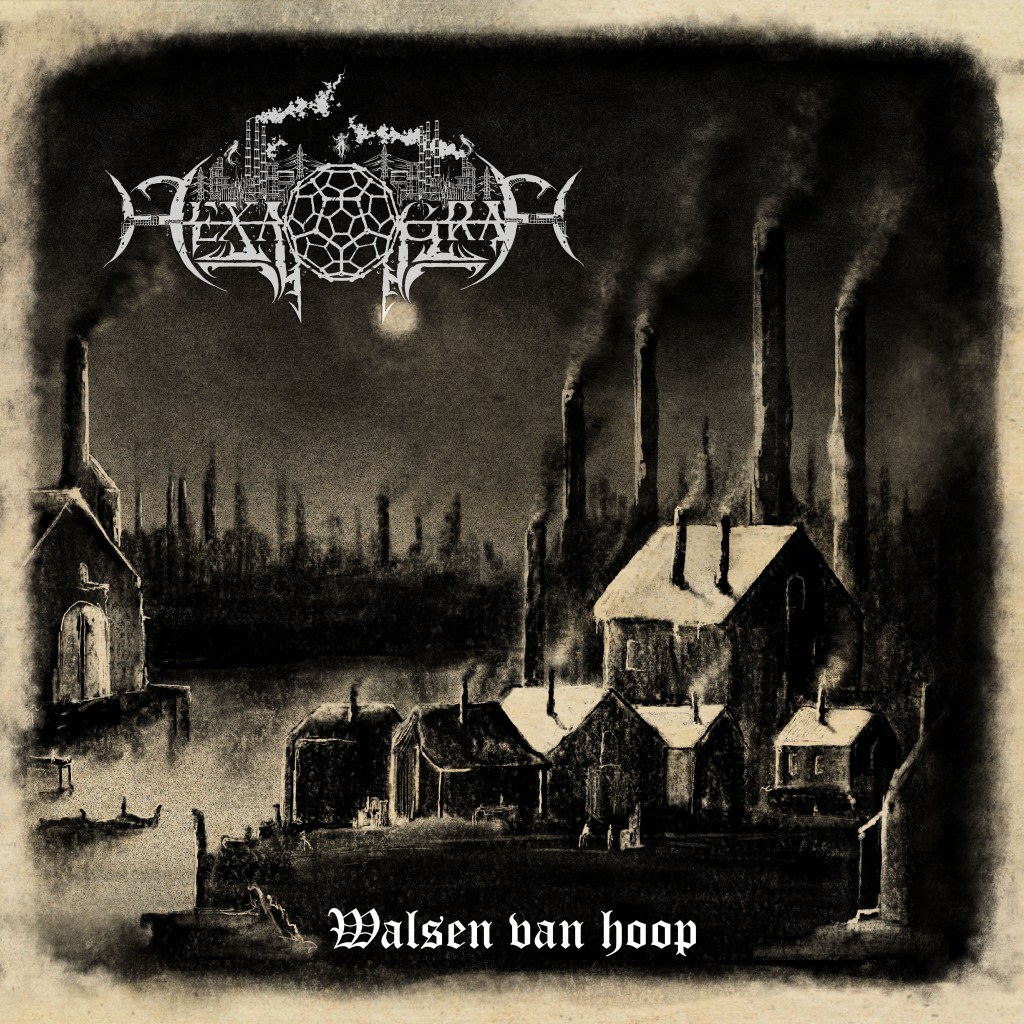
From the suffocating haze of the Dutch industrial landscape rises Hexagraf, a new collaboration between Floris (Asgrauw, Meslamtaea, Sagenland, Schavot, The Color of Rain) and Daan (Duindwaler, Hellevaerder, Infantry, Throne of Time, Whore of the Underworld) born in the winter of 2024 that was forged through creative alchemy and a shared fascination with decay, machinery, and the slow industrial collapse of human society. The duo’s debut album, Walsen van hoop, is a monolith of blackened doom that crawls beneath the weight of rust and smoke. It is music shaped by labour, by exhaustion, by the endless turning of mechanical gears.
Hexagraf’s sound exists where steel meets sorrow. Its massive, suffocating riffs grind forward at a funereal pace, drenched with haunting symphonies and chant-laced dread. Gravel-throated vocals thunder in Dutch, conjuring visions of factories that devour men and skies that rain blackened sludge. There is beauty here, but it is the kind found in ruin: in the slow rhythm of decay, in the solemn hymn of the machine. Walsen van hoop stands not merely as an album, but as a lament for a world consumed by its own creation, a requiem for breath in the age of smoke and steel.
Today I catch up with Floris & Daan, to talk about the new project, its creation, the debut album, and what 2026 holds in store now that Hexagraf has arrived.
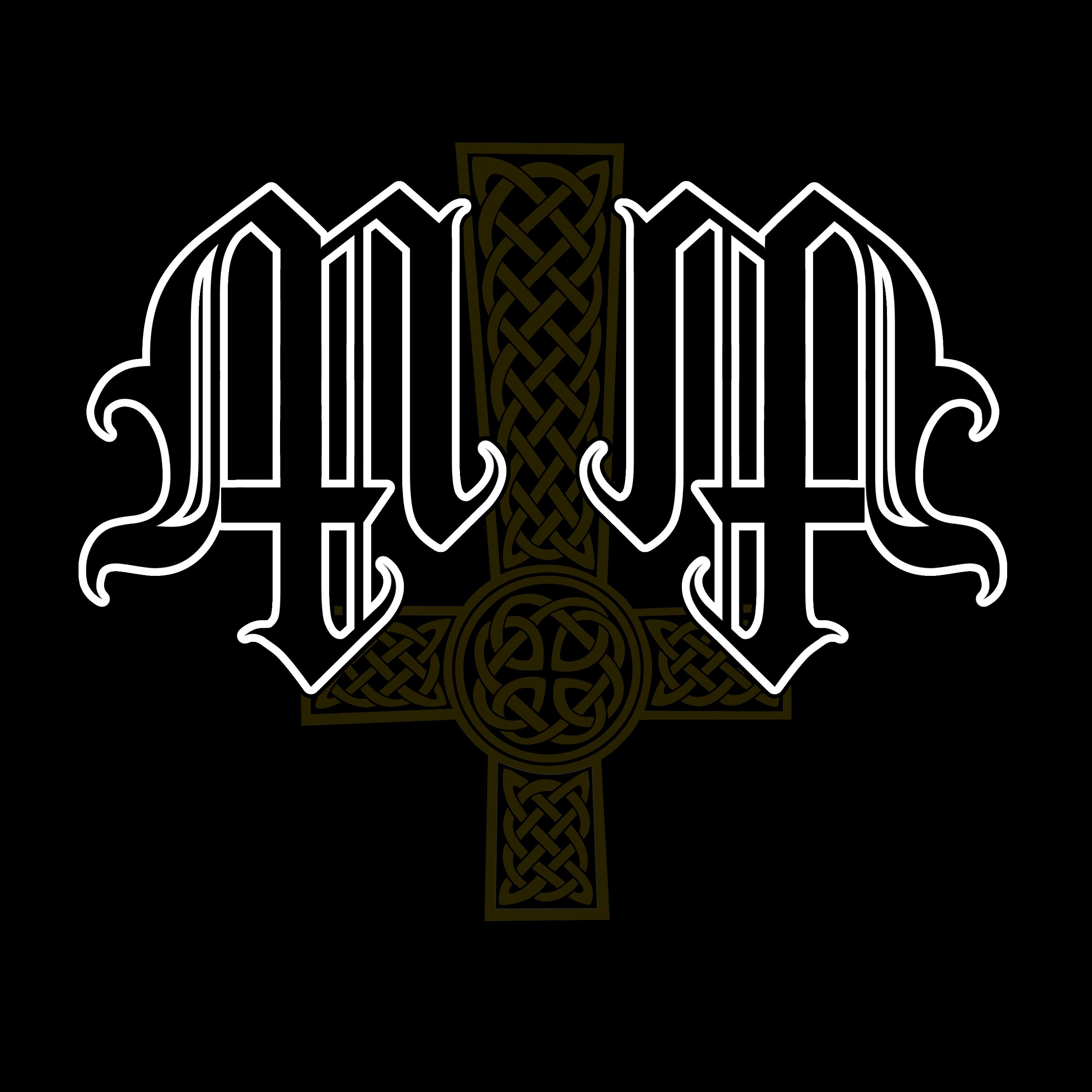
I like to start these things by asking, in your own words, what is Hexagraf, and what led to its creation last winter? Also, this isn’t a question but a statement to say Hexagraf’s logo is awesome. Looking at it you can hear the sound of the album before it even begins!
Floris: “Hexagraf is a bit of nostalgia, an ode to old doom bands, but with our black-metal twist. We’ve labeled it as blackened doom, but it sounds different from other bands in the genre, because most of them lean into the atmospheric side, while we stick to the traditional approach.
The band consists of Daan (vocals) and me (all music). We met through the Verloren Vertellingen split LP, which featured bands from both of us. While working on that record, we exchanged musical and lyrical ideas. Since then, we’ve stayed in close contact and shared an interest in black metal and music production. When I hit a creative block while writing lyrics for a Schavot album, Daan offered to help. He wrote several lyrics and recorded rough vocal demos to guide the phrasing. His voice immediately struck me – deep, filthy, and full of character. You can practically hear the phlegm and tobacco in it. I kept some of those demo vocals as backing parts on Schavot and suggested we start a doom project together. With our shared black-metal roots, that atmosphere naturally seeped into the music. Meanwhile, Daan had long had a specific theme in mind that fit this project perfectly…”
Daan: “The Hexagraf story – the chapter of life we are in – carries much meaning. Heavy industry is a theme I’m involved with every day. I work at a steel plant, visit every factory on site, get to know many layers of the organization, inspect various aspects, and advise on improving safety, compliance, and overall quality standards. It’s clear that this is a dangerous industry, and exploring those dangers gives us the foundation for creating brutal metal – dreadful yet hopeful. The goal is to achieve perfect safety, while remembering the sacrifices made by the workers who came before us. This album is a harsh reflection on those who worked before. One entity rules a region; compliance means food on the table and the ability to survive. But does that justify accepting risks to your own health and safety?
Floris and I have talked about many of the recent events, sparring about making the story more dark and obscure than reality. Adding some black and white contrast to the colors in which we created this album.”
Floris: This theme called for a highly detailed logo that would capture an industrial atmosphere. We wanted graphite to serve as the band’s symbol. Bram Bruyneel took on the task and exceeded all expectations. The result is a stunning logo, a true piece of art in itself.”
Following from that, I read ‘the name Hexagraf draws on the hexagonal structure of carbon (“Hexa”) and the material graphite (“Graf”), symbolizing both hardness and the inevitable decay wrought by industry.’ (With “Graf” itself also being a play on words with the Dutch word for grave, to fully capture its bleakness.) Let’s expand upon the themes a bit more. What inspired this theme for the project, was it more the historic, industrial revolution era where life was literally cheap, or more current events? I suppose both inevitably tell the same story of human greed and a select few profiteering while the rest suffer due to it.
Daan: “What started this album was Floris’ fascination with my daily job: working at the only steel plant in the Netherlands. We often joked – morbid as it may sound – about the emissions and extremes of heavy industry. Working until your body gives up, relying on your mind simply because you need to survive. It’s a darker vision of life as it is experienced today, and it gives a glimpse into how things once were in the past… and, in some parts of the world, still are everyday reality.
Going home safely with your coworkers is not a guarantee. Looking back at where we came from, reveals a grim landscape of health issues – but the mental burden is just as significant. If you couldn’t work 12-hour shifts, six or seven days a week, you were seen as unreliable. And if you were unreliable, good luck feeding your family. You had no choice: work or starve.
The title track Walsen van hoop translates to The Mills of Hope. Working at a steel mill was, and still is hard, dangerous work, although conditions have improved. Highly skilled people dedicated their lives to mastering this craft.
Where we are today is a graduation from what came before. Remembering those who have fallen so that mankind could learn, and so that others may be safe, is a core part of being a steelworker. It’s something primal, and something I carry with pride.”
You guys will have literally just released the debut album, Walsen van hoop, when this article goes live, but it’s been ready for a while already. So let’s talk about the composition process as I’ve had my physical copy since October. That means in less than 12 months you had composed, recorded, mixed, drafted logos and artwork, printed onto CD, and were ready to go. That’s impressive! How does the composition process look like for you two? Had you been working on some songs previously, or was it once you were inspired by a theme and a topic you two were just able to rattle through an album?
Floris: “Both Daan and I are extremely driven when it comes to music. Once we start something, we finish it. Everything else has to move aside. I’m also quite the control freak; I tend to start planning before the project even properly begins. As soon as we realized the album was becoming something serious, we had already reached out about the artwork and logo. Artists don’t like working under time pressure, so you have to take care of those things early on.
The composition process was actually quite straightforward, because we had clearly defined our roles. I wrote all the music, while Daan handled the lyrics and vocals. Of course, he had input on the compositions, but for the most part we each focused on our own responsibilities. Some riffs were written on guitar, but I also composed entire sections on keys, adding guitars and drums later. Since the guitar parts feature sliding notes, I decided to record everything on a fretless bass to give it a more ‘singing’ quality.
Because we took care of everything ourselves – including the production – we avoided any unnecessary delays that might come with outsourcing those processes.”
Daan: “Floris is the mastermind behind this music. We inspired each other with the vision we shared, but to call this true duo work would be a lie. It was his musical vision that made this project what it is. My role was to inspire Floris, to give him the means to carry on – something new to sink his teeth into. But this is his brainchild; I only gave him what he needed to bring it to a full release. That’s not to downplay my own contribution, because everything I did is part of this work. But if I hadn’t played this role, someone else could have.”
Floris: “Well, the album revolves around Daan’s story, and his growls were the reason to start it. Without that, Hexagraf wouldn’t have started.”
What about the musical influences behind Hexagraf? The sound on this album is crushingly slow and heavy, were there any musical projects who partially inspired or influenced its sound, style, or creation?
Floris: “Musically, I drew inspiration from funeral doom bands like Thergothon, Shape of Despair or Mournful Congregation, as well as from the second Sear Bliss album, where they took a more restrained approach compared to their other work. I also listened to Erik Satie, and Harmony of the Spheres by Joep Franssens, to get into the right mood.”
Daan: “There were no specific inspirations I drew from to create this album. Of course, there are many bands I admire, and they have qualities I’d love to be able to pull off. But in the end, I just do my own thing – whatever feels right in the moment.”
Then let’s talk about recording the album, because like all of Floris’ productions, the mixing is unbelievably tight. How did the recording process look like for this album? Was this a home recording, or what’s the deal? It doesn’t look like Floris does much production work outside of his own projects, but I was convinced Asgrauw’s Oorsprong was recorded in a professional studio so I’ve been curious how this set up looks!
Floris: “We handled everything ourselves. From recording to mixing and, this time, even mastering. I’m self-taught in this area and basically just wing it without any formal knowledge. I trust my ears and compare with reference material that I think sounds good. It all takes place in a small attic room. But that’s part of the charm for us: we’re not fans of overly clinical productions. It has to feel alive.”
“I’ve recorded all the music – drums, keys, fretless bass, and guitars – at home and sent the rough mixes to Daan. He recorded the vocals on top, which I then added back into my mix as separate tracks. All of this was done entirely online.”
“Besides my own bands, I don’t produce for other bands. Mixing and mastering takes an incredible amount of time and energy. I’m talking dozens of hours spread over weeks – and on top of that, dozens more hours listening while commuting, to catch every little mistake and improvement. When you hear a song that many times – and are in hyperfocus – you even start dreaming about it. Hearing it over and over again in your sleep… No, I simply can’t do that for someone else.”
Then just because I’m nosey, I also like to know what everyone is using on their albums. What equipment did you guys use to record the sounds on this album? And is there any equipment you’d still like to add to your arsenal for the future?
Floris: “Every track I finish in the studio teaches me something new. Gear isn’t everything to me, but we still invest regularly in better instruments, equipment, and software. My setup is centered around a laptop running Cubase, packed with countless VSTs and plugins. Audio comes in through an SSL12 4-track interface. My drums are a bit unusual: a hybrid kit combining Roland V-Drums with real cymbals, because I’m a total cymbal freak. On guitar, I play a customized Ibanez 7-string, and my bass is a Cort Curbow 5-string fretless: a lightweight instrument with a massive sound. Keys come from a Korg synthesizer, and I control everything with a Nektar MIDI board, plus a super-portable Akai LPK25 mini-keyboard. I mix on Yamaha HS5 monitors, though I often switch to headphones (Sennheiser HD280 Pro) for a different perspective. And of course, the final master gets tested everywhere: from crappy Bluetooth speakers to phones and even in the car with the bass cranked… because that’s how most people actually hear music these days.”
Daan: “Besides Reaper, a Focusrite 6i6 (second gen, I believe), some plugins, and an SM7-B, I don’t use anything else. I record at home and send the dry tracks to Floris, and he takes care of the rest. Floris is mixing a lot more black metal like than I am myself, but he feels the music and does what is needed.”

The theme for Hexagraf is quite unique for metal, and thematically is more akin to the industrial genre. Because of that uniqueness, I wondered if there was any literature (or art, film, etc) that you would recommend for fans to get to know more about the themes behind your music? Or if not for your fans directly, just in general for our readers that you think is interesting and relevant?
Daan: “Besides following a few Facebook groups about steel plants worldwide, I don’t really check out many channels on the subject. The only one I truly follow is Viktor Machina, a guy who visits steel plants around the world and captures the history and technology behind them. I don’t go the extra mile, so to speak, because these are scenes I already see every day in my line of work. Just look up steel mills or steel plants on YouTube. There are so many different factories around the world, each with its own kind of charm.”
Similarly, we’re also fans of the arcane, the esoteric, the ancient, and the occult over here at Mithraic Magazine. With any of those keywords in mind, is there any interesting literature you can think of that your listeners, or our readers might enjoy?
Floris: “Perhaps not entirely related to this topic, but the last book I read – Hannelore – is about a girl who grew up in a cult, where the most unusual things became part of their everyday life. Through manipulation and the creation of religious fear, the leader had the entire community under his control. I have a fascination with this theme; religion is poison.”
Then excluding anything already mentioned, is there anything else Hexagraf recommends we check out?
Floris: “We’re always so busy with music that we hardly have any time for anything else, haha!”
[Editor’s Note: Floris isn’t joking, as his Metal Archives page can attest!]
I always like to know, who are some of the more obscure or underrated bands you think we should be paying attention to? Then similarly, is there anyone specifically from the Netherlands that you think also deserve more recognition for their contributions to the craft?
Floris: “The Netherlands has a vibrant scene with some really great underground bands. I was already inspired back in the day by bands like Orphanage, Polluted Inheritance, and Liar of Golgotha, though sadly these bands are no longer active. I also like acts like Kjeld and Salacious Gods, who draw heavily from the 2nd wave style. When it comes to metal, that’s the style I always keep coming back to. And of course, I can’t resist giving a little shameless shout-out to our own Zwotte Kring collective.”
Daan: “When it comes to obscure bands, I have a huge list. A few of my current favorites are Prison of Mirrors, Defacement, and a recent gem I discovered: Brazen Horde. Most of the music posted on the YouTube channel OdiumNostrum falls into the kind of music I enjoy, though it’s not specifically Dutch. A Dutch band I think deserves more recognition is Fir. I saw them live a while back and was blown away – it felt like stepping into a time machine back to the ’90s.”
With Walsen van hoop releasing right at the end of the year, what does 2026 look like for the project? And are there any plans to make this a live project in the future?
Floris: “Daan and I both have several active bands and projects besides Hexagraf, so we’re always working on something. Hexagraf will likely have a follow-up as well, but that will happen whenever inspiration strikes. The project isn’t necessarily intended for live performance, but never say never.”
Then I might as well ask as you’ve both got plenty, what about with any of your other projects? Which projects of yours will be seeing some activity in 2026?
Floris: “At the moment, I’m in the final stages of mixing a new Asgrauw album, and it’s going to sound absolutely massive! On top of that, I almost have a new album ready for my project Schavot, which will likely be released in early 2027. It’s going to be a very atmospheric and symphonic record. There’s also material already prepared for Meslamtaea, and bits and pieces from some other projects here and there. Right now, we’re focusing on performing Verloren Vertellingen live: a show that combines four bands into a single performance. After that, we might try to bring my solo project Schavot to the stage, with Daan’s band, Hellevaerder, serving as the live band for the project.”
Daan: “It will be a somewhat calmer year for me, after a very busy schedule. With Hellevaerder, we’ll begin writing our third full-length album. Together with Bas, the guitarist from Hellevaerder, we have a new project planned to be recorded in the first half of 2026 – a full-length in the style of Watain. With Duindwaler, I want to record a new full-length, as well as with Magistraal. And in the next few weeks, I’ll be recording drums for two bands that requested my ‘battering,’ but more on that next year!”
Lastly, before I let you go, is there anything you want to say or add before we finish?
“Thank you for the interview; it is greatly appreciated!”
Appreciate it guys!
HTBLOF
In a scene overflowing with imitation, Hexagraf feels like something elemental, a band forged not in the frozen forests or abyssal hellfire, but in the choking breath of the machine. Walsen van hoop is less an album than a monument: a slow, grinding elegy for the human cost of progress. With every turn of its rusted gears, Hexagraf reminds us that decay has its own kind of beauty – one born from smoke, sorrow, and the endless rhythm of the world devouring itself.
If you’ve not already checked the links around the page, I highly suggest you do so. This isn’t just a debut from a new project, it is something a little different that has been expertly produced and packaged by some Dutch veterans of the scene. It’s blackened metal, it’s slow and doom-y, but is instead cloaked in a mask of soot rather than that of traditional corpse paint. Thematically, it’s refreshing for the genre to not play out the same tropes but instead open the doors to themes beyond the generic Satanism, paganism, or nihilistic misanthropy.
The logo, the artwork, the sound, it all works together to create a debut that is both visually and sonically appealing. If you’re into a slow but thumping kind of blackened metal then this will likely appeal to you.
And remember, if you like it and can afford to do so – you should definitely buy it!
Links:
Facebook
Instagram
CD copy:
Void Wanderer Productions
WAR Productions
 Mithraic Magazine
Leave a comment