Continuing our tradition of speaking to those at the forefront of the dungeon synth scene, today we’re spotlighting an artist whose dedication to the genre goes far beyond music alone.
Today’s artist isn’t just a musician: they also run a record label and zine, organize events and festivals, design logos, and produce homemade cassette tapes. In short, today’s artist is another person who I can safely say has their fingers in more pies than a leper on a cookery course.
As a genre, dungeon synth can be deceptively difficult to get right. It’s a genre many think they can master easily, but few truly can. At its best, dungeon synth (and its many sub-genres) weaves into the background like a half-forgotten memory; never intrusive, but can be deeply emotive.
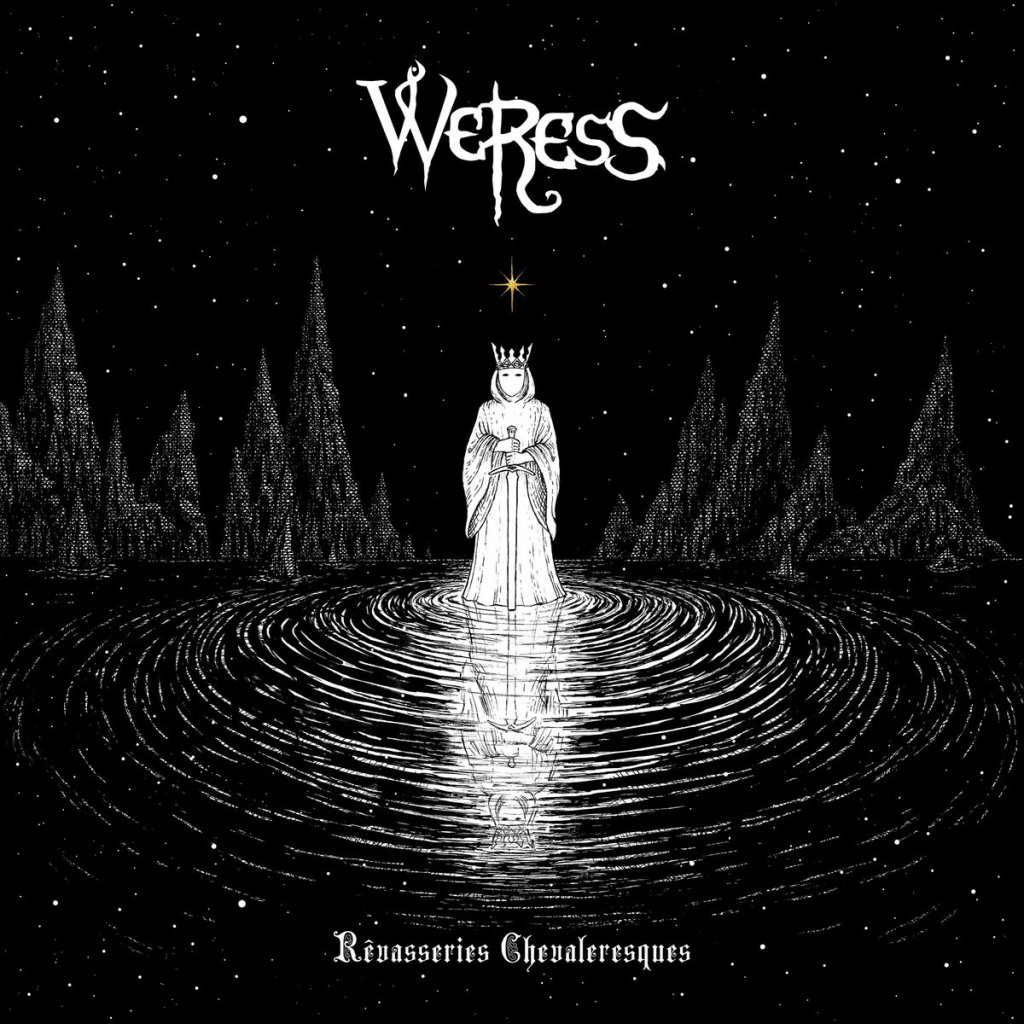
John Lordswood has perfected this art. His project Weress, and the 2024 release Rêvasseries Chevaleresques, is truly worth a moment of everyone’s time. However, Weress is nowhere near his only project.
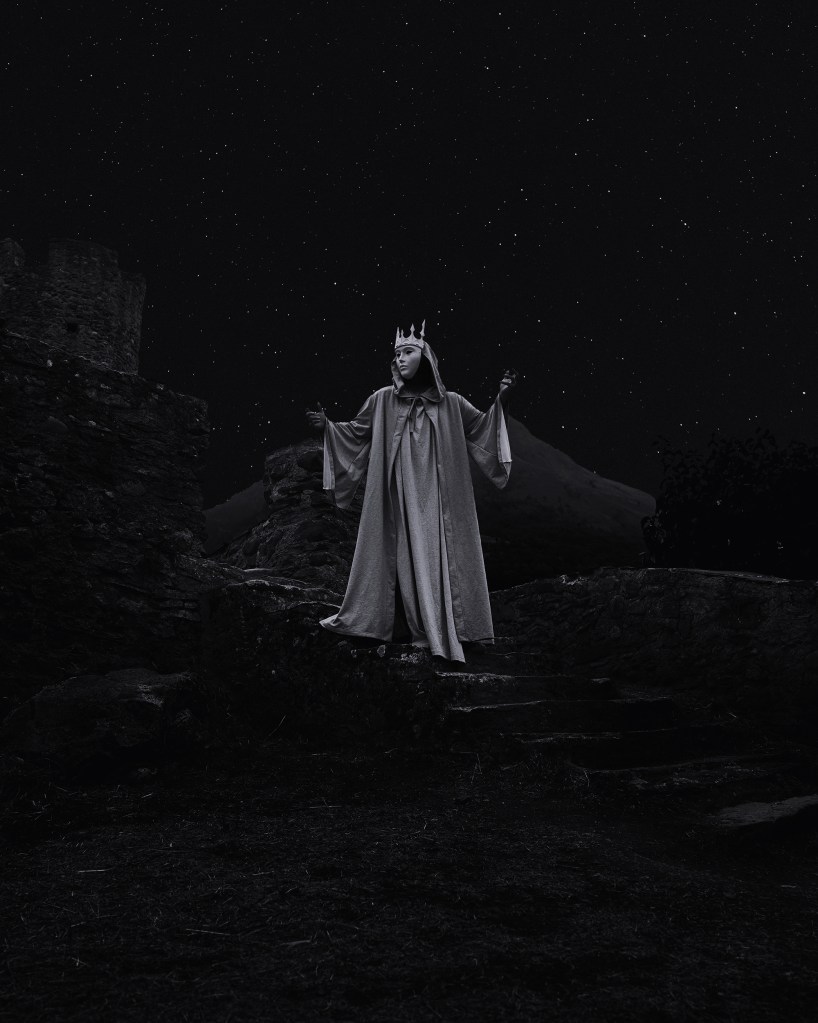
John also releases music under the names Autumn Enchantments, Comets Dust, Cursed Hunter, Draconis Star, Dreamy Knight, Falls of Sirion, Iskonge, Knight on the Moon, La Tour Sombre, Mond on the Old Ruins, Ondes, Pensées Noires, Secrets of Silence, Skhemty, and What Remains Engraved in the Marble (and those are just his active projects!)
To me, he is the human manifestation of Adderall and I’m in utter awe of his productivity, so let’s talk to the man himself about everything and anything dungeon synth.
Let’s get into it!
John Lordswood Interview (With D, 2025)
As mentioned in the intro, you’ve got a bit of everything going on. So I think the best place to start is by asking, in your own words, who is John Lordswood?
John Lordswood is one of my aliases, the one under which I currently present most of my musical projects. Over the years, I have used several other names depending on the project, the theme, or the subgenre I wanted to explore. I have been releasing ambient, electronic and metal music since 2012, I was only 15 at the time, so my early works were mostly ambient and experimental, like what you can hear in the Era I (The First Years) of Weress. So eventually, the name “Lordswood” became the symbol of something more mature and confident, a way to gather and define my different worlds under one artistic identity. You could say John Lordswood represents a more affirmed part of who I am, with a name that I hope will endure, carrying forward all the ideas and projects that keep evolving through time.
Let’s talk about your origins. Tell me about your journey into dungeon synth. How did you get from Anomy to here?
I am hearing impaired, and since childhood I have always felt this disconnect with the world around me and this feeling of perceiving things in a rather different or solitary way. So I already expressed myself a lot through drawing, theater, film, music etc. Anything that allowed me to express myself, I did it, and the more difficulties I encountered in fitting in, the more I felt this need to create.
My earliest influences sparked a deep fascination with underground music and the importance of preserving it, especially the Dungeon Synth scene, which I first discovered through the side projects of Black Metal artists like Mortiis, Burzum and Valar. I initially started playing guitar for a Black Metal band that never truly came to life, but soon felt drawn to keyboards. They allowed me to create darker, more atmospheric sounds for my solo or collaborative projects, for instance with Müldeponie. From there, I began exploring the art of recording, experimenting with textures and melodies that could express what I felt deep inside, without really knowing where it would lead me. Around 2013, through the label Obscure Dungeon Records, my old friend and I began producing cassette releases for Dungeon Synth and fantasy-inspired ambient artists, promoting musicians such as Lord Lovidicus or Uruk-Hai. The following year, I started my first dungeon synth project, Balrog, which reflected my fascination with Tolkien’s world and the stories of Middle-Earth that inspired me deeply at that time. From there, I created many other projects inspired by this unique genre and co-founded The Dungeon Synth Archives YouTube channel with the same friend who managed Obscure Dungeon Records. I must have had about twenty Dark Ambient and Dungeon Synth projects where I expressed myself and tested different things.
As for Anomy, it was a band I joined in 2018 in Bordeaux, where I mainly played rhythm guitar. It allowed me to perform my first live shows and to experience what it felt like to be part of a band, rather than always composing alone in my cave or collaborating remotely. Having difficulty socializing, this experience taught me how to be comfortable around people, to make new, healthy and enriching connections, to record in new conditions, to learn new things technically, and so many other wonderful things artistically.
Throughout that period, I kept experimenting, searching for my artistic identity, while trying to highlight the artists I admired for their rich and imaginative worlds.
You mentioned there you’re hearing impaired. I’m probably not the only one who is ignorant on the full spectrum of disorders that can constitute hearing impairment, but I was curious to know more. Do you mind talking about your condition, how it impacts your hearing in day-to-day life, and how you overcome any hurdles to create the music that you do?
I was born hard of hearing, I can only hear from my left ear and my right ear is about half deaf. And yet, somehow, I ended up making music. I have always used hearing aids to understand people around me or follow conversations in movies, but over the years I have been wearing them less and less, I live a more solitary life now, I spend a lot of time in quiet places, especially in nature, so I don’t always feel the need for them. I think this disability pushed me deeper into my own world, people say I’m always daydreaming, on the moon, it definitely made me used to not always understanding what’s being said around me.
When I compose, I never wear my hearing aids, I feel more comfortable without them. Same for concerts, I don’t wear my hearing aids on stage. I just adapt with things like using headphones for mixing or setting a monitor on my left side only so I can hear myself clearly. To be honest, it’s not always easy. Mixing is always a nightmare for me, mastering even worse. With time I have started to ask for help with those stages because I can’t always detect things like unwanted noise or crackles that could be annoying in the final sound.
Since I’m hard of hearing, I also use sign language. I practice it with my partner who is profoundly deaf, and with several friends who also have hearing impairments. Little by little, I have started incorporating sign language into my live performances with Weress, soon I want to integrate it more clearly into music videos too, to tell stories in another way and highlight this culture that is almost invisible in the music world.
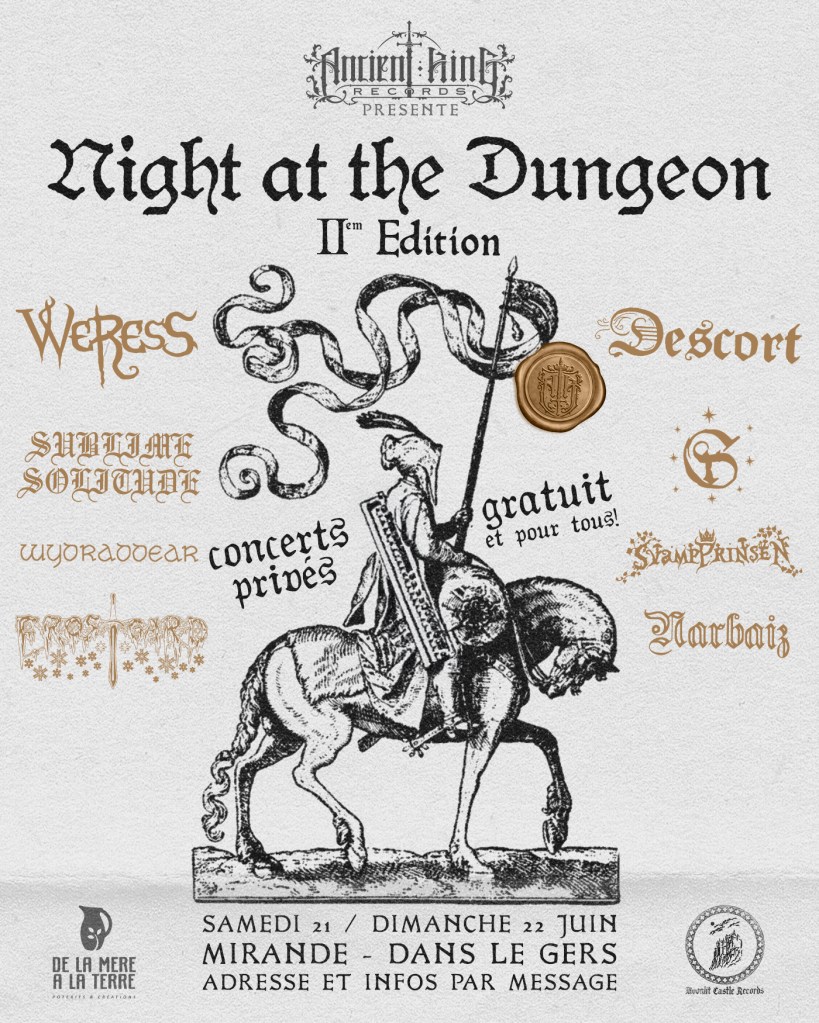
Night at the Dungeon II is coming up in a couple of weeks, how has that been going? How did you find starting a new event in this genre? Were there any challenges? Did you find demand exceeded your expectations?
At the time I’m writing this, Night at the Dungeon II has already taken place, and once again, it was an incredible experience.
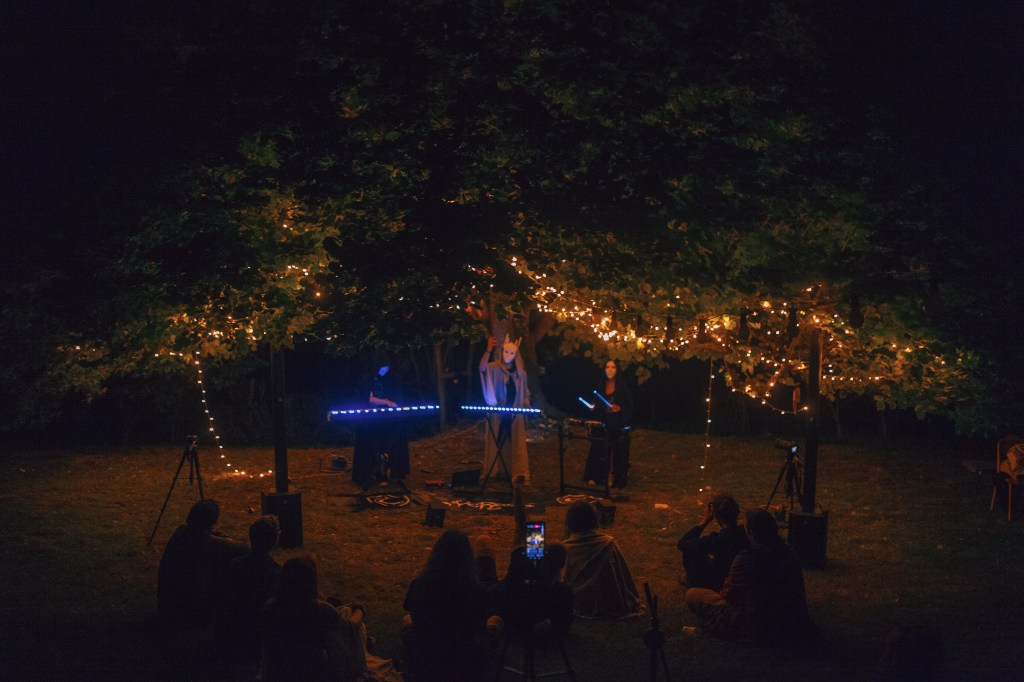
The approach to these events is always very friendly and family-like, surrounded by close friends and curious people who simply enjoy spending time listening to music together. The idea came naturally when we wanted to present Weress live to our friends and family, who couldn’t attend our first show in Belgium for the second edition of the Dark Dungeon Festival. So we decided to organize our own small event, completely free, on France’s Fête de la Musique day, and we announced it publicly online in case anyone else wanted to join.
We are still learning a lot from these moments, how to present the scene, but especially how to improve the technical and sound aspects. We allow ourselves to experiment with new things live, without pressure or stage fright, to play unreleased tracks that are still in progress. For example, last year I performed new material from La Tour Sombre, one of my side projects that has never been released, and my friend Henri Dumois from Descort also took the opportunity to refine his set and experiment with tracks still in the composition phase. Performing live is a completely different process from composing and recording music alone in a home studio, it’s another form of artistic work and expression.
The great thing with this fest, is that we work as a team and can constantly improve everything so that both the audience and the musicians have the best possible experience. We take the time to meet everyone, to do things at our own pace, and to simply enjoy these shared moments together. This edition truly reflected who we are, it felt personal and genuine. What I love is that this festival can be moved anywhere. As long as we have a garden or a place where we’re allowed to play, we can bring Night at the Dungeon to life. I really like the idea of being able to take it anywhere.
Once again, it’s about experimenting and doing things our own way, but I do hope that one day I will be able to organize something bigger. Maybe even in a medieval castle in France. And why not collaborate with other festivals too? If we join our forces and ideas, I’m sure we could create something truly special for all the fans of this genre.
Let’s talk about Ancient King Records, what prompted its creation, and what have you got coming out for the rest of 2025? Also, based on your experience, which countries would you say have been the biggest enthusiasts for buying physical merch?
The main motivation was the desire to be free in what I want to create artistically. I could feel this strong flame inside me, this urge to keep producing my own music for years to come, and to keep giving life to new projects. At some point, I realized I needed to gather all of that under one dedicated label, a place where I could take the time to properly present everything I wanted to share.
I had stopped working with Obscure Dungeon Records in 2018, it wasn’t really my label, but my friend’s, and he had started to lose interest in the physical productions. I felt that the organization and direction didn’t truly fit my vision anymore. Even though those creative times together were fantastic and memorable, I wanted something that felt more personal. So when my friend decided to end ODR, I wanted to keep going, to continue promoting my own work while also supporting the artists I genuinely love, to continue to work with labels that I love throughout the world. That’s how Ancient King Records was born in the big lines, with an image and spirit that truly represents me, built on stronger and more independent foundations.
It was also around that time that I started using my artist name John Lordswood, as a kind of renewal : new projects, new label, a new chapter. Since I also work in graphic design, I love collaborating with printers, experimenting with materials, taking creative risks, all at my own pace. I have a lot planned, though with my day job it sometimes feels like progress gets delayed little by little, even if I manage to catch up from time to time.
From my experience, the most active countries for buying physical merch are the United States, France, Spain, and Germany, among others. But you know, everyone is important, no single country stands above the rest. Every knight who wants to escape into this world and support a relic from the kingdom holds a special place in my realm.
Then, let’s talk about the tape making process because that’s some old school tech, and I’m all about it! How does one go about printing tapes in 2025? You’ve got cassettes through Handmade Tapes of the King, but I remember seeing some Weress VHS somewhere too. How challenging was that to get made?
Through Ancient King Records, I chose to produce cassettes with professional manufacturers who handle duplication in factories. There are many of them across Europe, and even outside of it, and over time I’ve tested several before finding the right balance. I wanted to create tapes that would be sturdier, last longer, and truly reflect a higher level of quality.
At the same time, I still make handmade cassettes for my more secret or experimental projects, which I duplicate myself using my double deck. It’s something I continue to explore creatively, especially through The Handmade Tapes of the King, a small personal series for limited editions, usually demos or minor releases that I don’t see being produced in runs of 50 or 100 copies. Recording on magnetic tape is actually quite easy once you get used to it and incredibly enjoyable, even when you print and assemble the J-cards, making sure every detail is presented with care and intention.
It’s a beautiful object that fits the genre perfectly, both in its appearance and the analog sound it produces. I find it more suitable than a CD which has that more digital feel closer to an MP3, or a vinyl record which has a different kind of warmth depending on the equipment you use to listen to it. It’s my preference, but the tape has the advantage of being easily portable for solitary walks in the woods, while still offering remarkable sound quality depending on how well you take care of it.
I haven’t made any VHS myself yet, the one for Weress was produced by SF Productions to visually present the project’s first live performance. But I do have the equipment to make some of them, so it won’t be long before I start creating some myself, there are a few more experiments to come and to test.
I’ll be honest, I best know your work through Weress (with Rêvasseries Chevaleresques being a release I’m particularly fond of.) But, as an individual with so many projects, I want to know – do you have a favourite? If so, which and why?
Thanks a lot, Rêvasseries Chevaleresques was a particularly emotional album to record and present. I feel that way with every release, honestly, each one feels like revealing a piece of myself, with all my sensitivity. But this one was especially meaningful, as it allowed me to express certain experiences from my life that I needed to externalize at that time.
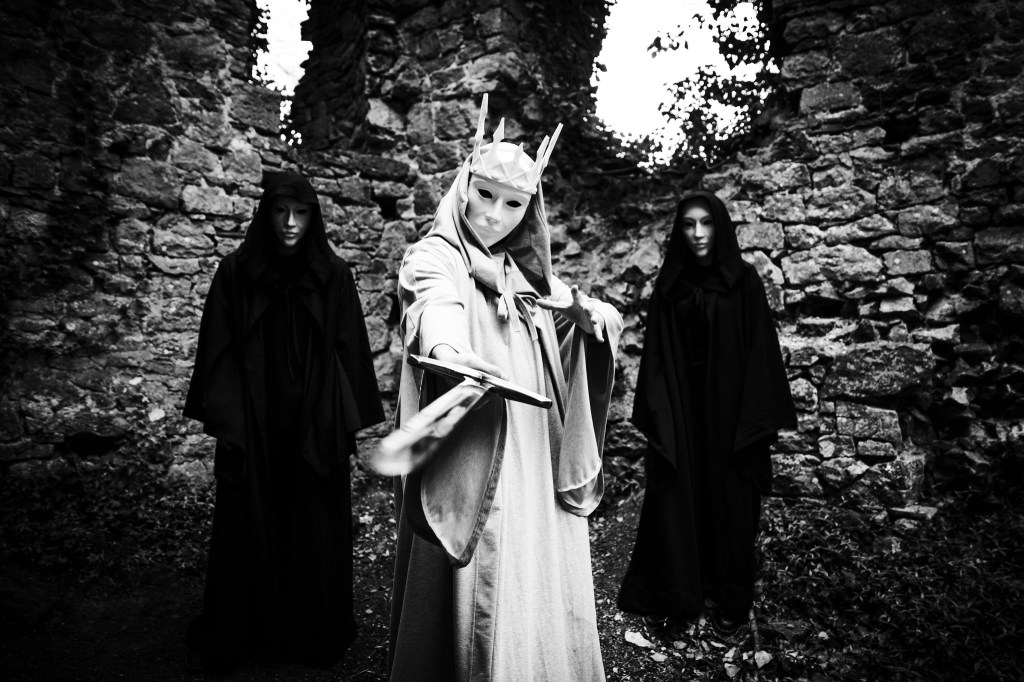
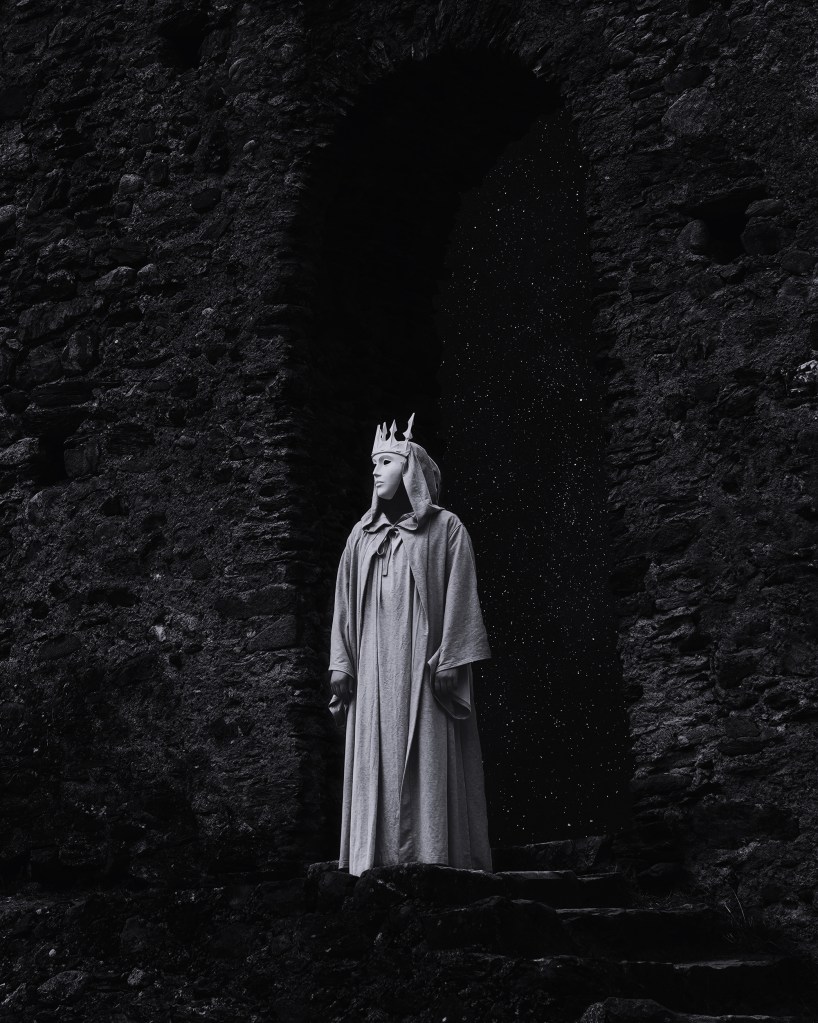
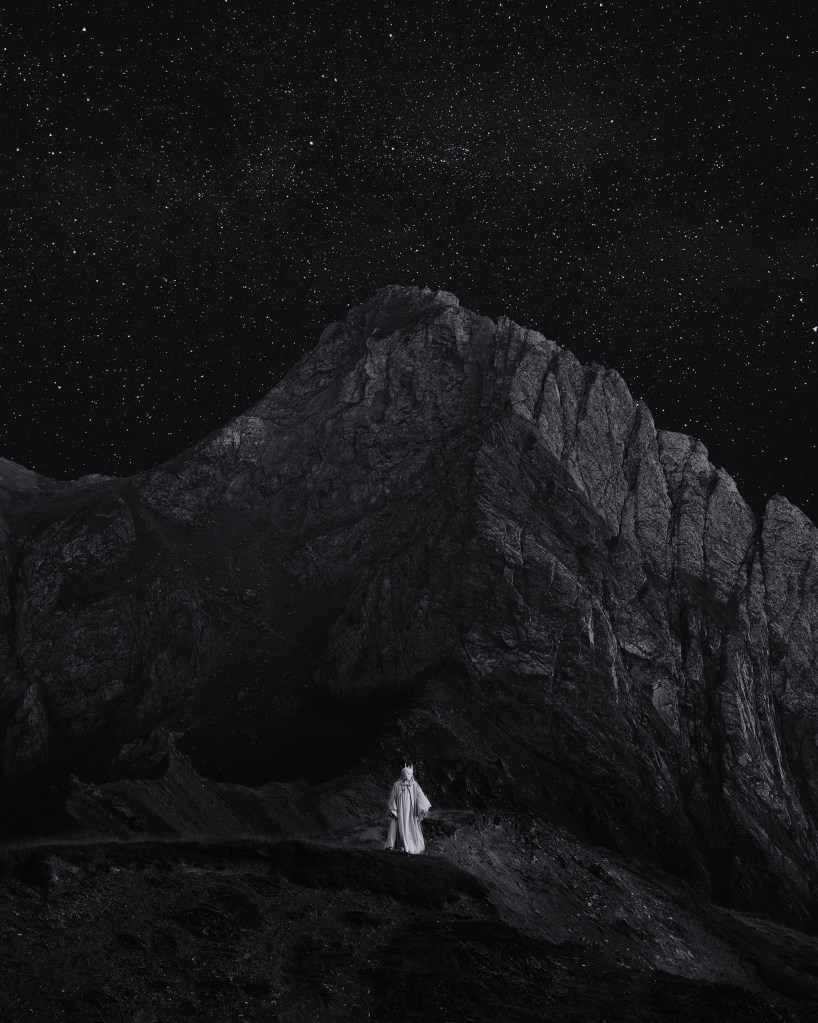
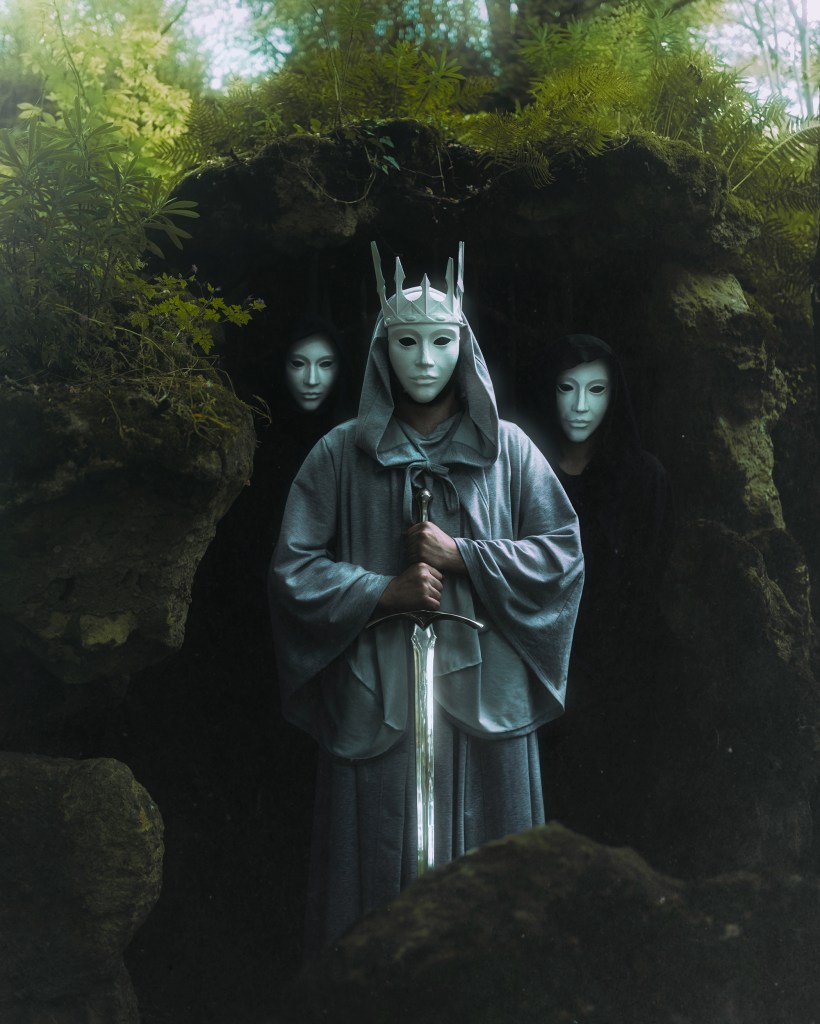
All my music and projects are important, even the ones I have moved on from, because they remain part of who I am and what I have expressed. If I had to choose one, though, it would be Weress, because it represents me the most. Through it, I explore my doubts and fears while blending my fascinations and what I love, a constant search for balance between light and darkness. I have always been drawn to that duality, the contrast between melancholy and hope, night and dawn, the white king in the universe of Weress has become a way for me to reconcile those opposites within myself. There are many small details and elements hidden in the mixes or in the choice of instruments that only I truly understand, which represents people who are close, or events, or an action, or a movement ~ but I love when listeners can interpret them in their own way, creating their own stories. Each track of Weress are filled with echoes of childhood memories and distant places awaken gentle nostalgia that I deeply cherish. I compose and write as a form of therapy, each piece helps me make peace with something within.
People around me often describe me as a dreamer, someone with his head in the clouds, always imagining knightly tales and worrying about the world, someone who prefers wandering through nature at night rather than during the day. And I think Weress fully represents that: the king of his own world, lost in reflection and doubt, like a dream just passing through the night.
Who or what would you say has influenced your music the most? And how have these influences changed over time?
From this desire to go further, there are so many things that can influence me. So much to imagine and observe. That it’s hard to say exactly what guides me when I create music. When we start making art, we often begin with mimesis, we imitate something we have seen or heard, and to find our footing, we start by copying or mimicking, hence the name. You have to start somewhere, and once you become aware of that and begin to improve, experience helps you master your instruments, your techniques, eventually your sound on the synthesizers. That’s how, over time, you slowly reach what you create today.
In truth, everything inspires me, my emotions in the moment, life events, memories, moments of contemplation in nature or daily life, conversations, the many other artists who express themselves through different forms like cinema, books, music or theatre. I use all of that, it’s like a huge mix inside my head, from which both good and bad things emerge, I express them all. I say good and bad because I’m always experimenting, I think it’s important to keep trying new things to push yourself further. You don’t have to show or release everything you make, but at least make it, create something in that moment. You can always decide later whether you want to share it or not. That’s how I work.
I would also say that observing what has already been done, or what hasn’t, can greatly influence how we express ourselves. I believe you have to dare to try things, even if they have been done before, or even if they haven’t. Mix ideas, take risks, and most importantly, dare to be yourself.
What digital equipment do you recommend to make your sounds? And same for physical, is there any physical equipment you’re particularly fond of? What VST would you recommend for drums? Whatever was used on The Dungeon on the Moon was excellent!
I have tested different MIDI keyboards. In terms of touch, I particularly enjoy playing with the Nektar Impact GX61, as it is spacious enough and very pleasant to use for composing or performing live. I really recommend it for those who like playing piano, for example. I experiment with different analog and digital keyboards to bring a certain warmth back into the music. I started a few years ago with a Korg MS-20 Mini, but it did not really suit me. Currently, I have a Korg DW-8000 which I am experimenting with, now I’m looking for a Roland JV-30, the same model that Mortiis and Depressive Silence used on their early compositions. Otherwise, I use a lot of VSTs. At first, I used free ones, which worked very well when combined with certain effects, over time I started buying more and more plugins depending on what I needed.
I really recommend using VSTs, as they are the best option for getting a clean base sound that can then be shaped in any direction. There is now a wide range of sounds and effects that can be found and modulated. I don’t know what particular sounds to recommend, as it really depends on what you are looking for. I would say that the Omnisphere library is very complete, Nexus as well in the same vein, Diva for more analog sounds, and the ERA collections for more folkloric tones. The percussion I currently use comes from the Invasion drum kit, where I change the tom sounds with different effects in the mix. For the older version of Dungeon on the Moon, I was probably using percussion from ERA Medieval.
I always like to ask dungeon synth artists about production, as I feel this is always the biggest limiting factor in new artists coming through (in any genre really). When you were first releasing dungeon synth was there any advice you followed, any channels you discovered, or any words of wisdom you care to part with? What are John Lordswood’s dungeon synth production tips?
When I talk about production, I mean the sound creation process itself. Before anything else, I write down everything that comes into my head so I do not forget anything : title ideas, visuals, the physical presentation, the colors I might use to illustrate the project, the emotions or stories I want to tell or remember, the poems I hum, the atmospheres or melodies I hear in my mind, the effects I would like to use, the instruments that could best express what I feel, how I want a certain mood to sound on a specific track and so on.
I build my compositions this way to give structure and coherence, so that each project tells a consistent story. Every idea is worth noting, it is like describing a rhythm that I can later bring to life.
Then I play and improvise, following what I wrote, to project myself into what I felt at that moment. I record, sometimes over several sessions depending on time and mood. Later, I come back to it to mix, often weeks later, to let my mind rest and to see what is missing or what can be improved, a bit like arranging something that I had not planned before. That is generally how a track evolves in most of my projects.
However, sometimes I take a more experimental or spontaneous approach, simply improvising in the moment without going through all those writing steps, like in my projects Cursed Hunter or Ondes, where I allow myself more creative impulses. It also happens in other projects where I do write beforehand, but it really depends on the mood and what I am trying to achieve.
For someone so prolific, is there anything you do specifically to prevent the creative well from running dry? It seems like you’re synced into an endless stream of creativity. I’m sure plenty of people would like to access this state of productivity, what’s the secret?
I’m not really sure, I have never experienced a lack of inspiration, I honestly think I never will. There are simply too many things to do, to learn and to express. One thing is certain : when an idea comes, it will always be brought to life, no matter what, whether it is something artistic or not. I think it’s just part of who I am, something deeply rooted within me. Since childhood, I have always been this way, constantly drawing with different techniques, painting, writing stories or feelings, creating small plays in my parents’ garden, making short films alone or with family members I convinced to join my strange ideas, so many things I was already doing at a very young age. Being often alone, maybe I developed this need to create in order to feel alive.
Having projects to work on is stimulating, sometimes even a personal challenge. I am a calm person in everyday life, but when it comes to creativity, I can be quite exhausting because I put so much of my energy into it. That can sometimes be difficult when balancing work or family life, because my mind is always thinking about new ideas, and it can be hard to fully focus on anything else. Creating is vital for me. If I don’t create for several months, things can quickly become complicated mentally. And even though I can see that I have already made a lot of things, I still feel like I have never expressed enough, because there are always new things inside that need to come out. There is a constant desire in me to escape from the world, to be somewhere else. When I see people creating, I feel that same longing for escape through their universes. When I realize what kind of world we live in, and how sometimes you simply do not fit in this strange mixture, it feels like being a goblin who has never really been understood. That is why I think it is so important to hold on to what inspires you, so you can follow your own path the way you truly wish to.
We like the esoteric, the occult, the mysterious, and the arcane over here at Mithraic Magazine. With that in mind, is there anything in that realm you would recommend to your fans to check out?
I would not say that I believe in any higher force or hidden energy in nature, I simply think that we are here, and that is all. What matters to me is taking the time to observe what surrounds us, both the infinitely small and the infinitely vast. I often feel a bit lost because I admire people who have faith in something, but I do not believe in anything myself, not even in politics or systems where people try to set rules for others. What I believe in, if we can call it that, is the ability to feel, to be moved by what is inside us, and by what others manage to express through what they have around them. I like to observe time passing, like watching the flow of water, before we disappear forever, until we are forgotten in a few years, or in a few centuries if we are lucky. Maybe that is my own kind of mystery.
I always like to ask, just in general, what is something that John Lordswood recommends?
I would first recommend reconnecting with simplicity, walking in nature, observing the night and all its splendor, listening to the silence. That is where ideas are truly born.
As for works of art that combine literature, cinema, and visual expression, I would of course recommend The Lord of the Rings by Tolkien. The vision of his imaginary world has always carried me toward vast horizons, even through the films directed by Peter Jackson, this idea of an ancient world, both beautiful and tragic, slowly fading under the weight of time, yet still filled with hope through the actions and words of its adventurers.
I would also mention The Little Prince. I rarely speak about it, but it is a work I find deeply important for its tenderness and the way it speaks to lost souls. I used to listen to the story on vinyl at my grandparents’ house, and since then I often return to it to bring light to my mind during darker moments. It also exists as a stage performance and as an animated film, both beautifully made.
And in terms of music, I would recommend listening to anything authentic, listen to everyone who wishes to express themselves through this art form. There are so many within the dungeon synth and atmospheric music scenes. Do your own research and you will surely discover sounds that will resonate within you through their sincerity.
Finally, before we wrap up for today, are there any final thoughts or comments you’d like to add before we end?
What I would like to say is that I am not seeking recognition for what I do, I never have. I simply want to leave a sincere trace, a reflection of my soul, to exist, and to create something that might resonate with someone, allowing them to escape through what I share. And if it can inspire you or bring you comfort, then that is even better. Thank you for taking the time to show interest in what I do. Knights, let’s stay inspired.
Appreciate your time today, John!
Make sure to check out some of John’s music. I’ll post what I believe to be his latest release, but I’m not entirely sure, and even if it was it will likely change by the time this goes live as the man is unbelievably rapid in his release schedule…
Either way, all of his projects are worthy of a moment of your time. If you’re looking for the perfect soundtrack to some fantasy reading or epic and atmospheric gameplay, there will likely be a release in John’s discography that will suit the moment and elevate your experience even further.
And remember, if you like it and can afford to buy it – you should do so!
Links:

 Mithraic Magazine
Leave a comment