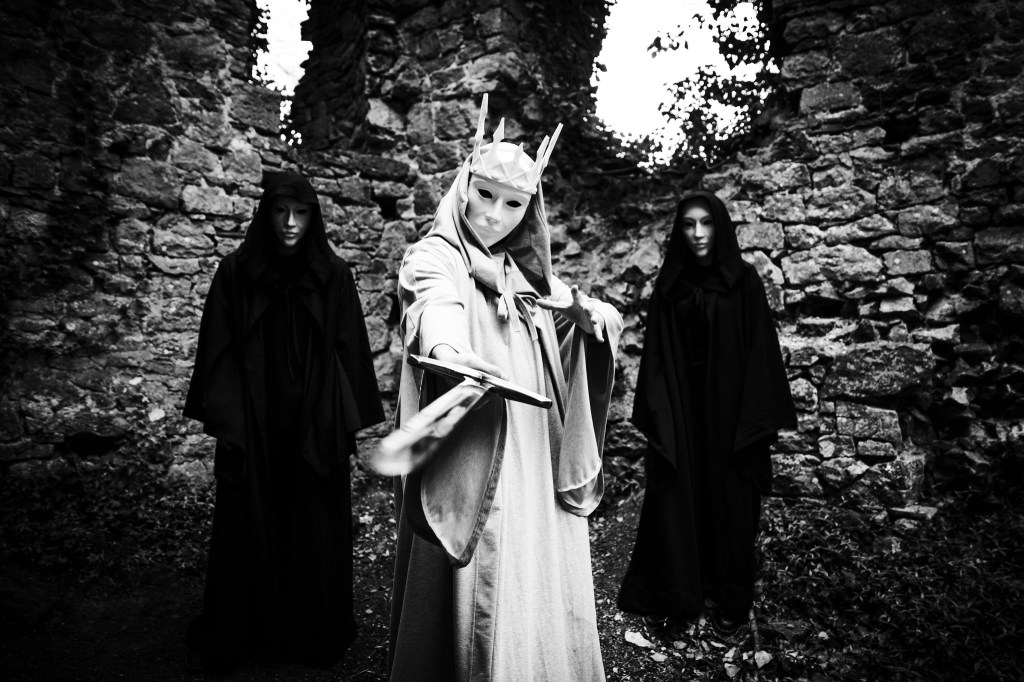
Hammerfilosofi are an underground black metal project that tempers raw ferocity with a sharp esoteric edge, forging music that is as confrontational in spirit as it is atmospheric in sound. With themes rooted in rebellion, occultism, and the darker currents of human thought, the project stands apart musically for its ability to merge bleak, uncompromising black metal with gloriously ungodly, haunting chants of the vocalist to create a powerful and instantly recognisable sound.
October 30th this year saw the release of Hammerfilosofi’s sophomore album, Signum, which continued their assault on the senses. While most sequels mellow, Signum lands like a barrage of artillery from the minute it kicks in and does not let go until it’s done. It’s angrier, darker, resonates and dwells in a darker place for a longer duration than in the debut that preceded it.
If you wanted the musical personification of war, then Hammerfilosofi might be what you’re looking for. Today D sits down with NKTFR & FCCM, to talk about the project’s beginnings, the latest release, and what the plans for further assaults are in 2026.
Let’s get into it!
I like to start these by asking, in your own words, what is Hammerfilosofi and how did this project begin back in 2020? Was it a Covid creation, or was this a project that had been long envisioned? And where does the name take its inspiration from? (Gorgoroth’s excellent album came to mind, but admittedly that could just be a subjective coincidence!)
NKTFR: Good evening! Well, the band was formed back in 2020 during the lockdown in Norway. I used the opportunity to rent a cabin up in the mountains in Norway, and went there with my family. It was there I decided that I wanted to get back into releasing music again.
Both FCCM and myself have been active in both the Norwegian and Italian black metal scenes since the mid 90s, but for various reasons withdrawn from it. I decided however, after exploring other forms of expression, that it was time to get back into it.
When choosing a vocalist, it was fairly easy. I contacted FCCM whom I had cooperated with on other projects, and it all began.
The name does take inspiration from Nietzsche and his writings, but it is just one of many sources. The name itself just fits perfectly the band and its philosophy / world view.
Last month saw the release of Signum, which in my opinion, continues what The Desolate One started but lands with heavier punches. How has the response been so far? Are there any countries in particular that are appreciating this release, and have any interesting opportunities arisen from the release so far?
NKTFR: The response has been really good! As for details regarding countries, I suspect FCCM has more insight than me.
FCCM: We’re talking about two different sides of the same apple. The Desolate One is a long journey through a tunnel made of bones and mephitic feelings, the starting point of a process we see evolving every day. We used the metaphor of rotting beings and a transcending totem shaping a new creature, moving from a decayed temple to a cave in search of new meaning, far away from the sun and the clamour of the modern world. The new album is the violent katharsis , once emerged from ashes the new being is naked and renewed , a death star is still a glimpse in the dark.
FCCM: As for the other question I would say USA, Poland, and Finland are leading the way, people who understand black metal as it should be: raw, uncorrupted, and disconnected from the post-modern, depressive, dark-addicted trends we see nowadays. Those are just dead meat waiting to be buried. Hunt or be hunted.
I’m a big fan of how this album sounds, the way the chanting and symbols work together in the mix is really nicely done. However I can’t find information online, so I wanted to ask where the album was recorded/mixed, and how was the process? Were there any challenges in recording this album or was it relatively smooth sailing recording Signum?
NKTFR: Thank you very much! We doing everything ourselves, but with guidance and advice from Devo (Endarker), who also does the final mastering. The recording itself, went smoothly, but being very detail oriented, we always find something to improve – to the point of it being counter productive, hehe. But I feel we landed on a good sound for the material.
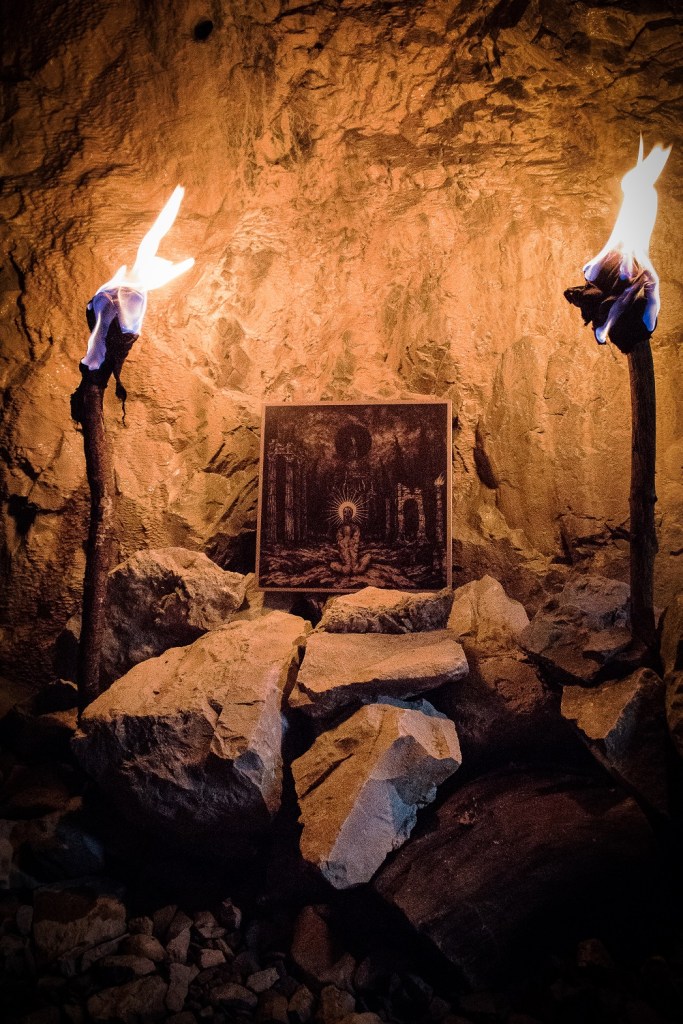
I also always like to give a shoutout to the artists who help make the audio come alive, so I wanted to ask, who created the artwork for Signum? It’s an awesome album cover, and incredible use of white space to draw focus onto the skull in hands.
FCCM: We came into contact with Manuel Scapinello after we discovered the amazing jobs he made with other black metal bands like Silva, Wormwitch, Pyra. This was the feeling we was looking for, as a result of a very fruitful communication we had during the process. We do really hope he will get a further exposure thanks to “Signum” cause he really deserves it.
I’m a bit of a nerd for what equipment everyone is using, so I wanted to ask what brands did you guys use to make the sounds on Signum? And is there any equipment you’d still like to add to your arsenal in the future?
NKTFR: Gibson and LTD guitars, as well as some borrowed basses that I do not recall the names of. Marshall and Peavy amps, as well as plugins sometimes. We experiment a lot to get the sound we want.
No specific brands etc. we are after. The sound is the most important, and we really like to experiment and try out new things.
I really like the way songs on Signam can go from methodical thumping to a blitzkrieg assault in a heartbeat, and it got me thinking. How do you guys approach the composition process? I gather NKTFR is the weapons man of the duo, so I wanted to ask if there is a specific seed that is sown for a riff, and if you grow it from there? Or if not, how do songs come together for you?
NKTFR: It starts with an idea, and evolves from there. Some times a song can almost write itself, in one evening. Other times it can evolve over time, and be ready in a month. Very little is forced, although sometimes that can needed.
But in general, it starts with a riff, and evolves from there.
Obviously being a duo from Italy and Norway could make this challenging, but are there any plans to turn this into a live project in the future? Honestly, songs like Funeral Veil would be such a punch in the face to feel live, as the double bass drums pound away, riffs obliterate the senses, and FCCM gets chanting. Any chance it can ever happen?
NKTFR: No plans at the moment, but we are open to suggestions and have definitely not ruled this out. But I agree. Many of the songs would fit the stage very well.
Let’s talk about the lyrics on Signum, was there anything in particular that inspired the lyrics on this album? What were your thoughts when composing lyrics for Centuries, Meta-Morphobic, and Premonitions Long Forgotten?
FCCM: The lyrics deal with the understanding of ancient and immortal ideals, and with modern forms of strength and weakness, illusions and deceptions born from the frightening vertigo and annihilating force of reality, where death reigns and we play its game daily with somber judgment. Centuries, Meta-Morphobic, and Premonitions Long Forgotten all explore these esoteric themes.
We like the esoteric, arcane, ancient, and occult over here at Mithraic Magazine. With those keywords in mind, is there any literature you would recommend? Either for your fans to learn more about the themes behind your lyrics, or just in general for our readers because you found it interesting.
NKTFR: I am currently re-reading Julius Evola´s “Ride the Tiger”, which is really good. And although I find the best authors are those who are able to explain something difficult, in an easy to understand manner (and Evolas is often times the opposite), I do enjoy many of his works.
Aside from this, I have read so many books throughout the years, I don’t really know where to start, haha. Perhaps FCCM has some suggestions.
FCCM: Marco Aurelio “Colloqui Con Sè Stesso” or Jean Mabire ” The God of War”
Excluding anything mentioned above, is there anything else Hammerfilosofi recommends we check out, investigate, or pay attention to?
NKTFR: I am personally a huge fan of history, culture, nature, museums, traditions etc. And find that we often pay attention to this when travelling, but forget about it when being at home. So my advise would be to do this where you live. You may be surprised!
I always like to ask bands, who are some of the smaller or more underground artists that you respect? Then just in general, is there anyone from Italy or Norway who you also believe deserve a bit more recognition for their contributions to the art?
FCCM: I’ve been into this music since the ’90s, and if we’re talking about bands that made history, my main references are Marduk and, later on, Funeral Mist, Ondskapt, and Deathspell Omega. Of course, there are hundreds of other great bands that would deserve a mention, but these are the ones that truly shaped the albums which left a strong mark on my musical evolution within the genre.
As for bands releasing music today, check out Acherontas, they’re amazing, and the bloody violence of Tsatthoggua or latest Blut Aus Nord. I was a big fan of Norwegian Black Metal in the ’90s; today I’d recommend Mjolnir, who play a very powerful, Wagnerian form of Symphonic Black Metal. From Italy, I’d mention Ad Omega and Blutsauger — check these guys out.
Obviously you’ve just released Signum at the end of 2025, but I was curious, what does Hammerfilosofi have in the plans for the end of 2025 and into 2026?
NKTFR: We are working on material for a future release that hopefully will see the light of day some time during 2026.
Lastly, before I let you leave for today, is there anything you wanted to say or add before we finish?
NKTFR: Thanks a lot for your interest in Hammerfilosofi, and the interview. We appreciate the support!
Appreciate it, guys!
HTBLOF.
And there we go, direct from the source itself.
In an underground landscape rich with raw expression and undeniable talent, Hammerfilosofi still stands out for its ability to fuse sonic violence with genuine introspective weight. Hammerfilosofi’s Signum invites internal reflection, urging listeners to confront the darker corners of thought and self. As Hammerfilosofi continues to sharpen its identity, it proves that black metal can be both crushing and contemplative, as well as a medium where sound and philosophy can collide with the intensity of forming quasars.
If you’ve not been tempted to check out the links throughout this page already, I highly recommend you reconsider the next 48 minutes of your life as Hammerfilosofi’s Signum is a frantic, thunderous, and epic sounding album that deserves a moment of your time.
As always, if you like it and can afford to do so – you should definitely buy it!

 Mithraic Magazine
Leave a comment