
Please bare with us while this page looks like a disorganised mess. It is only temporary, just like your existence.
Occult Literature
Below you will find a list of the following PDFs available for download.
- King James VI of Scotland – Daemonologie
- The Three Initiates – The Kybalion
- James George Frazer – The Golden Bough
- Manly P. Hall – The Initiates of the Flame
- L. W. de Laurence’s The Lesser Key of Solomon: Goetia
- Jacques Collin de Plancy’s Dictionnaire Infernal
- Johann Weyer’s Pseudomonarchia Daemonum
- Compendium Rarissimum Totius Artis Magicae Sistematisatae
- Carl Jung’s Liber Novus (“The Red Book”)
All work featured here is mirrored from the Internet Archive, and is available here under the same terms it was uploaded there. This document is being mirrored here to act as a back up to the copy hosted on the Internet Archive. Since the Internet Archive’s hack, it has been clear that decentralised hosting is the only way to ensure the longevity of these obscure, but culturally important documents. These books are from within the Public Domain, however, if this somehow infringes on your intellectual property, you can always email us.
King James of Scotland’s Daemonologie
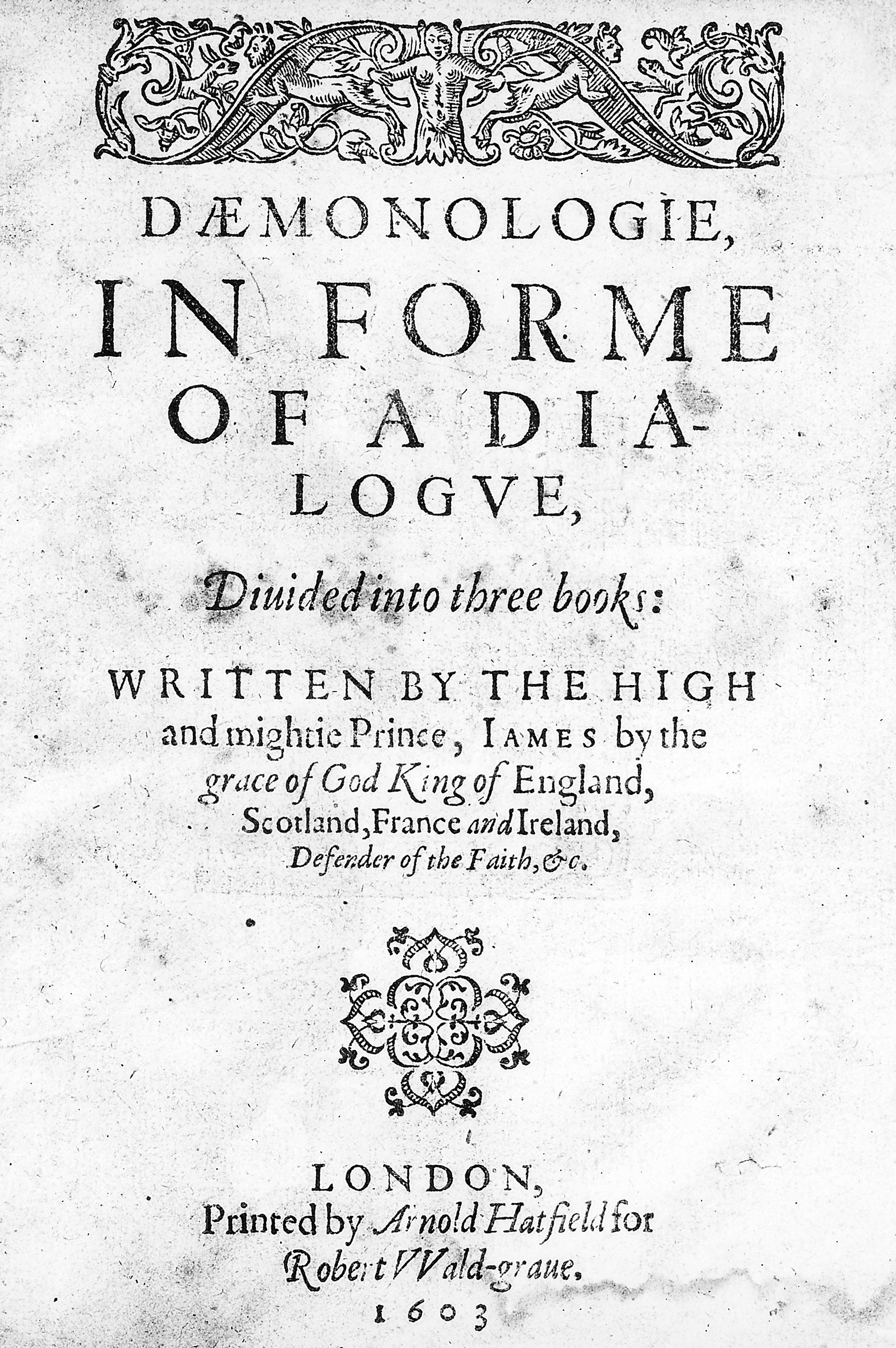
King James VI of Scotland’s Daemonologie, first published in 1597, is a unique and pivotal text in the history of demonology and witchcraft. Written by the reigning monarch, it reflects King James’s deep personal interest in theology, the supernatural, and the legal prosecution of witchcraft. What makes this work extraordinary is its dual nature as both a scholarly treatise and a practical guide. It seeks to educate readers on the perceived realities of witchcraft, sorcery, and demonology, while also providing a framework for identifying and prosecuting alleged witches.
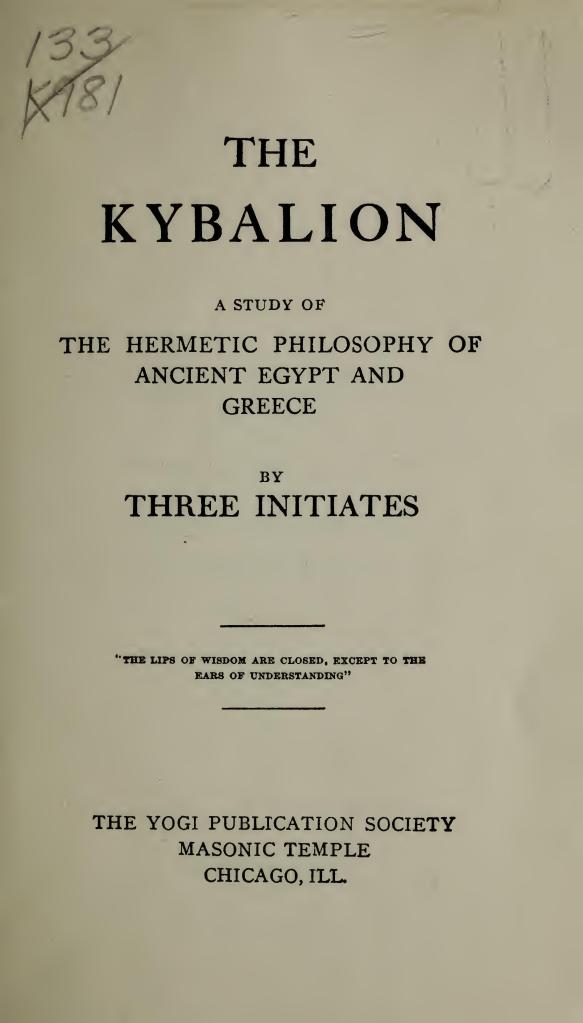
The Three Initiates’ The Kybalion
Published in 1908 under the pseudonym “The Three Initiates,” The Kybalion stands as a cornerstone of modern Hermetic philosophy, blending esoteric wisdom with practical teachings. Drawing from the ancient Hermetic tradition attributed to Hermes Trismegistus, the text presents seven universal principles that underpin the workings of reality. What makes The Kybalion particularly significant is its accessibility; it distills complex metaphysical concepts into a concise and approachable format, inviting readers to explore the interplay between mind, spirit, and the universe. This work has remained a timeless guide for seekers of spiritual and philosophical insight, offering a bridge between ancient mysticism and modern self-empowerment.
James George Frazer’s The Golden Bough
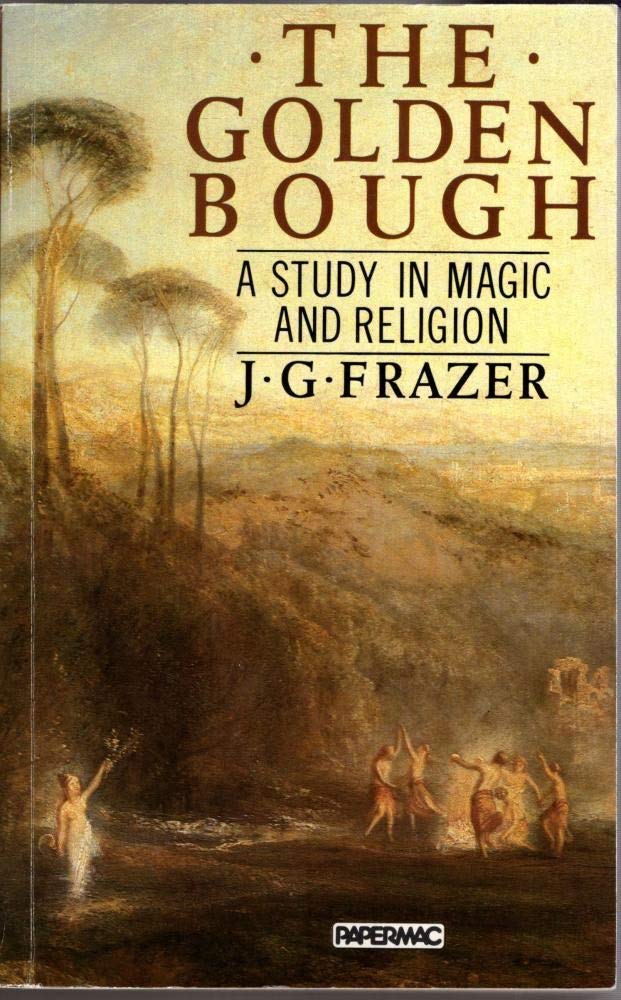
James George Frazer’s The Golden Bough, first published in 1890, is a landmark work in the study of mythology, anthropology, and comparative religion. Frazer’s ambitious and groundbreaking text explores the shared themes and rituals of human cultures, tracing the connections between ancient mythologies, folk traditions, and the origins of modern religious practices. By examining concepts such as sacred kingship, fertility rites, and the cycles of life and death, Frazer reveals the universal patterns that underlie humanity’s spiritual and cultural evolution. Its significance lies in its wide-ranging scope and interdisciplinary approach, making The Golden Bough an enduring cornerstone in the fields of cultural, religious, and esoteric studies.
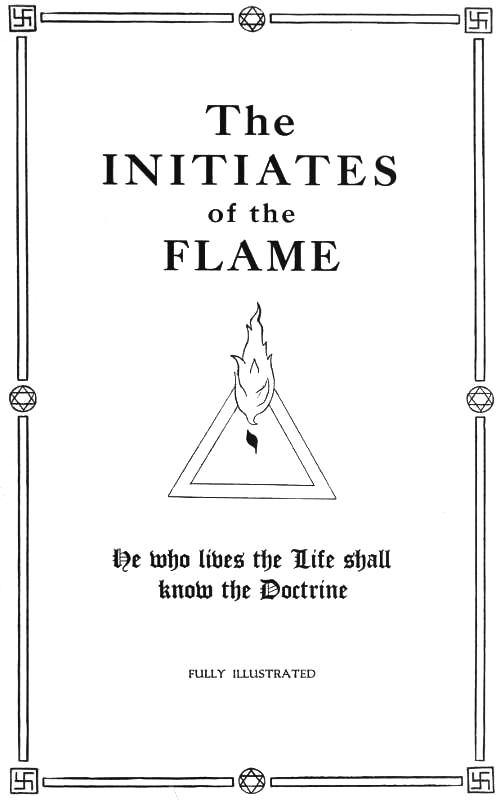
Manly P. Hall’s The Initiates of the Flame
Manly P. Hall’s The Initiates of the Flame, first published in 1922, is a profound exploration of the symbolism and hidden wisdom within ancient mystical traditions. Blending esoteric philosophy with allegorical interpretations, Hall delves into the sacred fire as a universal symbol of divine knowledge, spiritual transformation, and enlightenment. Drawing from sources such as Hermeticism, Freemasonry, and alchemical traditions, the text presents a path of inner awakening for those seeking deeper truths beyond the material world. Its significance lies in its ability to bridge the wisdom of antiquity with modern seekers of esoteric knowledge, making The Initiates of the Flame a timeless guide for those drawn to the mysteries of initiation and spiritual evolution.
L. W. de Laurence’s The Lesser Key of Solomon: Goetia (The Book of Evil Spirits)
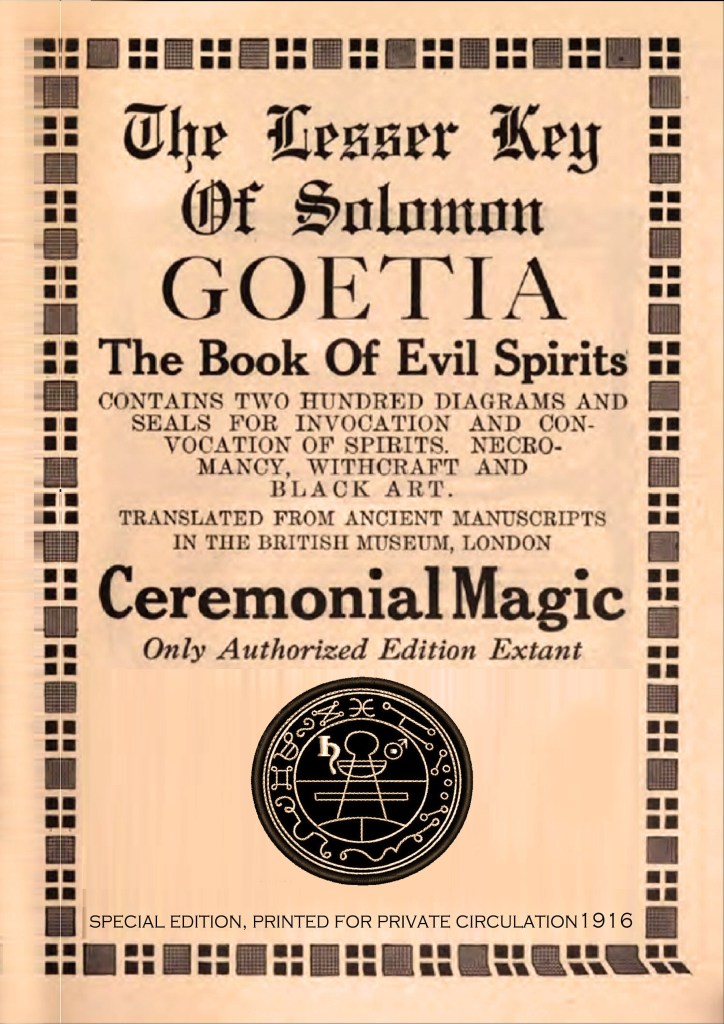
L. W. de Laurence’s edition of The Lesser Key of Solomon: Goetia (The Book of Evil Spirits) is a controversial yet influential work in the realm of Western occultism. Rooted in medieval grimoire tradition, this text serves as a guide to the invocation and control of the 72 spirits of the Goetia, a system of ceremonial magic attributed to King Solomon. De Laurence, known for republishing and commercializing esoteric works, brought this notorious grimoire to a wider audience in the early 20th century, influencing both occult practitioners and popular conceptions of demonology. Its significance lies in its synthesis of mystical, magical, and cabalistic traditions, making it a foundational text for those seeking to understand the darker aspects of ceremonial magic and spirit evocation.
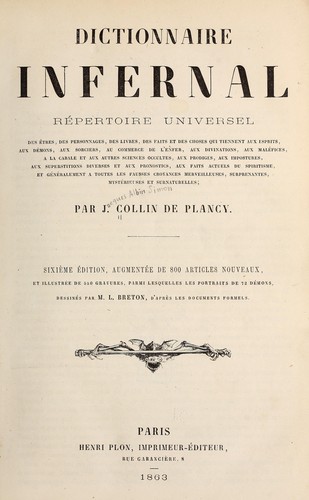
Jacques Collin de Plancy’s Dictionnaire Infernal
Jacques Collin de Plancy’s Dictionnaire Infernal, first published in 1818, is one of the most renowned and comprehensive works on demonology, occultism, and supernatural folklore. Combining scholarship with vivid imagination, the text catalogs a vast array of demons, spirits, and mystical beings, accompanied by elaborate descriptions and, in later editions, striking illustrations. Blending skepticism with fascination, de Plancy presents both historical accounts and popular legends, making the work as much a cultural artifact as an occult reference. Its significance lies in its enduring influence on the study of Western demonology, inspiring generations of scholars, artists, and occult enthusiasts in their exploration of the infernal and the unknown.
Johann Weyer’s Pseudomonarchia Daemonum
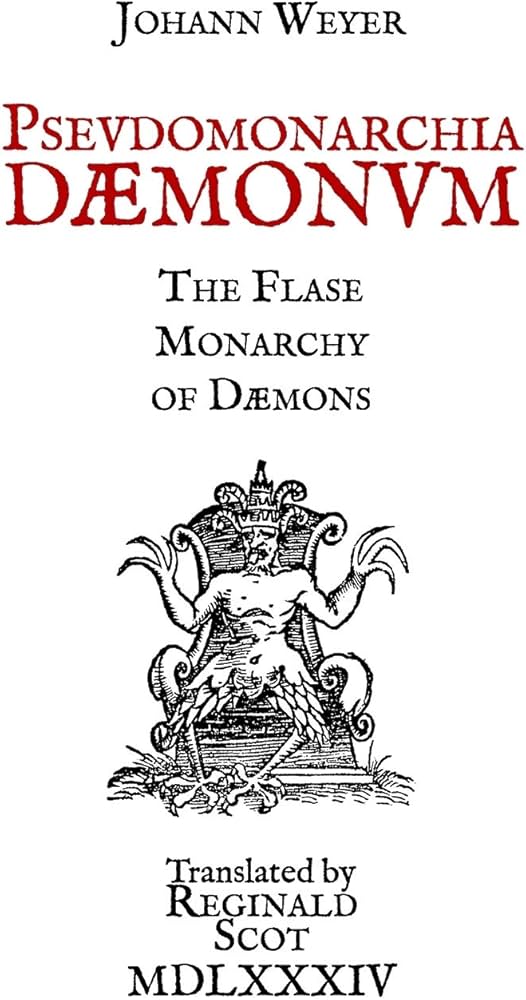
Johann Weyer’s Pseudomonarchia Daemonum, first published in 1577 as an appendix to his De Praestigiis Daemonum, is a seminal work in the history of demonology and Renaissance occult thought. Unlike many grimoires of its time, Weyer—a physician and skeptic of the witch trials—approached the subject with a critical eye, listing and describing 69 demons supposedly summoned through necromantic rituals while simultaneously questioning the validity of such practices. His work served both as a reference for demonological beliefs and as an argument against the persecution of alleged witches, making it a unique blend of occult catalog and proto-Enlightenment skepticism. Its significance endures as both an influence on later grimoires and an important historical document reflecting the intersection of superstition, science, and early rationalism.
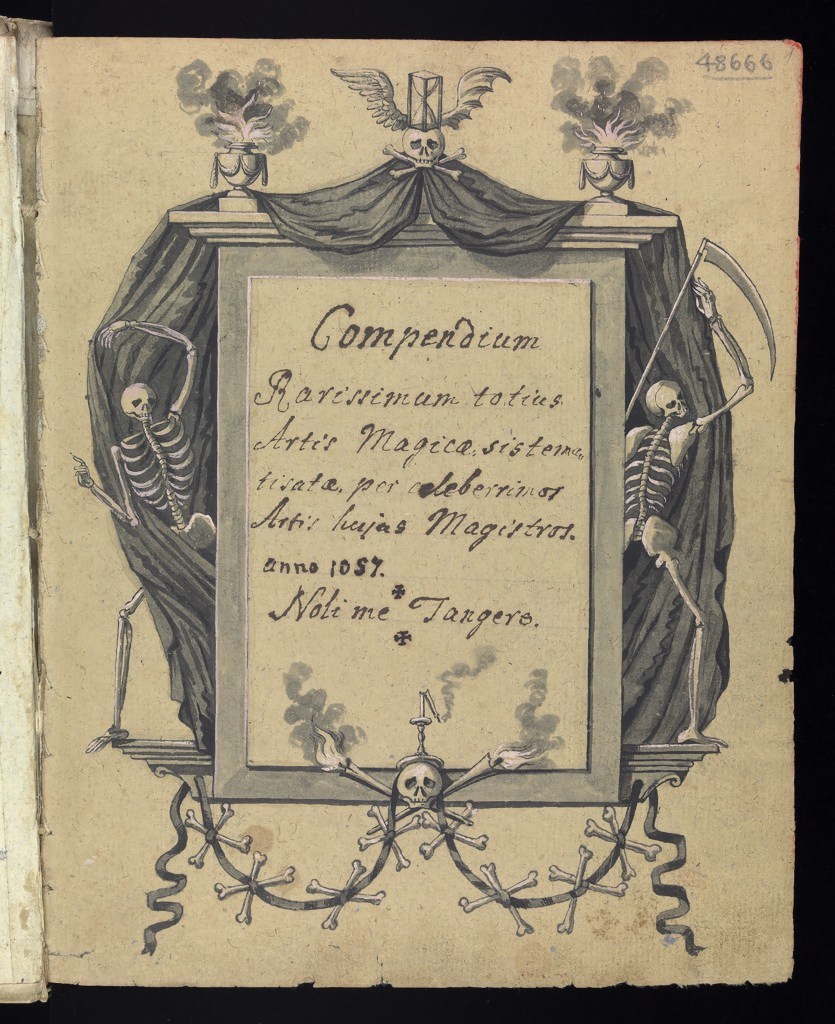
Compendium Rarissimum Totius Artis Magicae Sistematisatae
The Compendium Rarissimum, a mysterious and visually striking 18th-century grimoire, stands out as one of the most enigmatic works of occultism. Filled with vivid, often macabre illustrations and Latin and German texts on necromancy, demonology, and alchemical secrets, this manuscript offers a rare glimpse into the esoteric traditions of its time. Unlike more structured grimoires, its cryptic nature and elaborate imagery suggest it was intended for a select audience of initiated practitioners. Its significance lies in its rarity and artistic craftsmanship, making it a fascinating artifact for historians, occult scholars, and collectors seeking to uncover the hidden currents of European magical traditions.
Carl Jung’s Liber Novus (“The Red Book”)
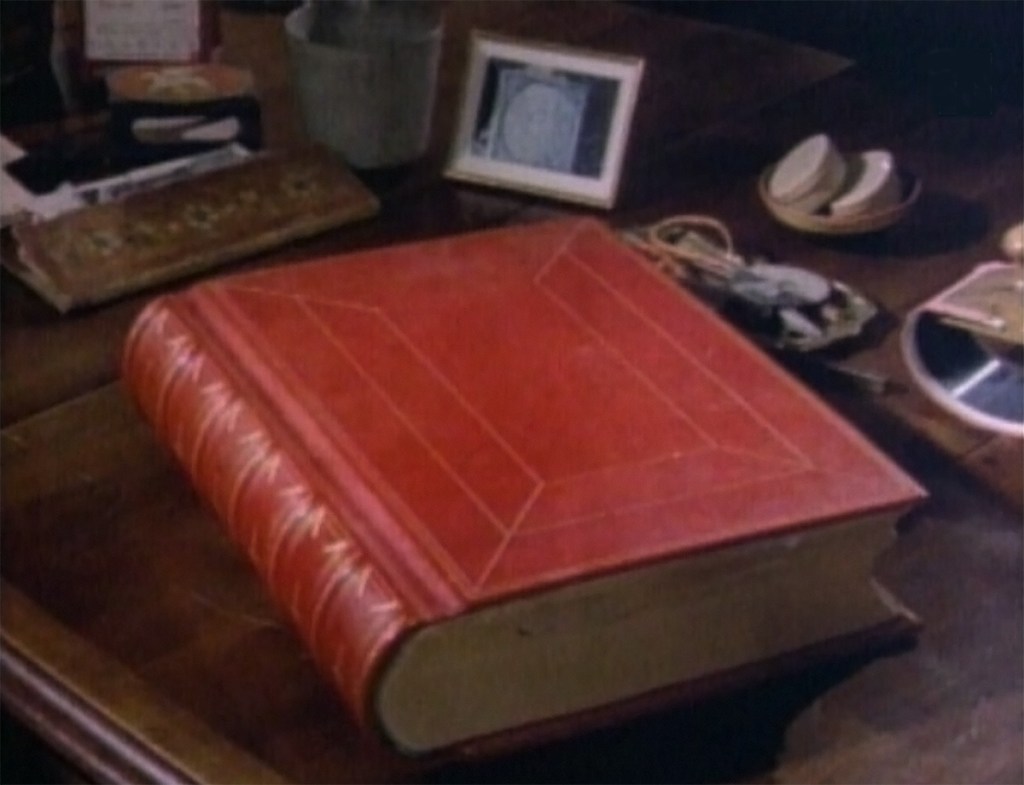
Carl Jung’s The Red Book, also known as Liber Novus, is a visionary masterpiece that offers a rare glimpse into the depths of the psychologist’s own unconscious mind. Written between 1914 and 1930, this richly illustrated and highly symbolic work documents Jung’s inner explorations, which later formed the foundation of his theories on the collective unconscious, archetypes, and active imagination. Blending myth, mysticism, and personal revelation, The Red Book is both a psychological journey and a spiritual odyssey, bridging the realms of science and the esoteric. Its significance lies not only in its profound influence on Jungian psychology but also in its status as a singular and deeply introspective work of modern mysticism.
 Mithraic Magazine