
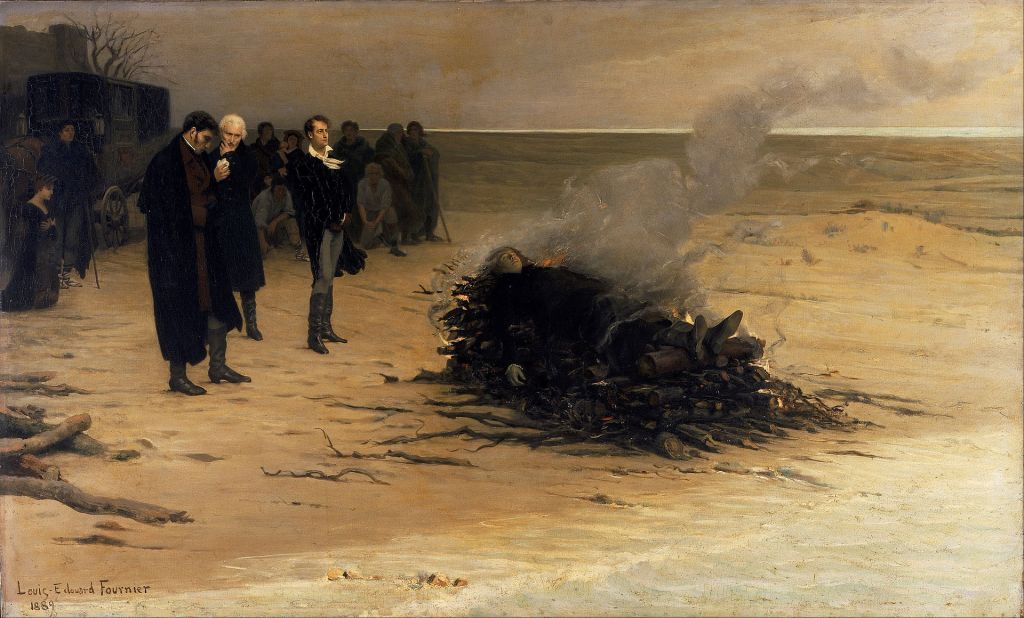
Louis Édouard Fournier – The Funeral Of Shelly
The Romantic movement, with its intense emotionalism and exploration of the human condition, continues to captivate. For those drawn to darker artistic expressions, like black metal, the Romantic era holds particular resonance. Themes of death, decay, the sublime, and the spiritual, so central to Romantic art, find powerful echoes in black metal’s imagery and lyrics. This exploration of death in Romantic art reveals not only societal anxieties but also a profound grappling with mortality, a complex response to the preceding Age of Enlightenment.

Thomas Cole – The Ruins Of Taormina
The Romantic period was a time of immense social and political upheaval. The French Revolution, the Napoleonic Wars, and rapid industrialization created a climate of uncertainty. Death, far more immediate and visible than today, permeated daily life. This omnipresence of mortality inevitably shaped the artistic consciousness. Romantic artists wrestled with death not as an abstract concept but as a tangible reality, influencing their understanding of existence and their art. The rise of industrialization, with its crowded cities and harsh working conditions, also contributed to a sense of alienation and unease, further fueling the Romantic fascination with death and the macabre.
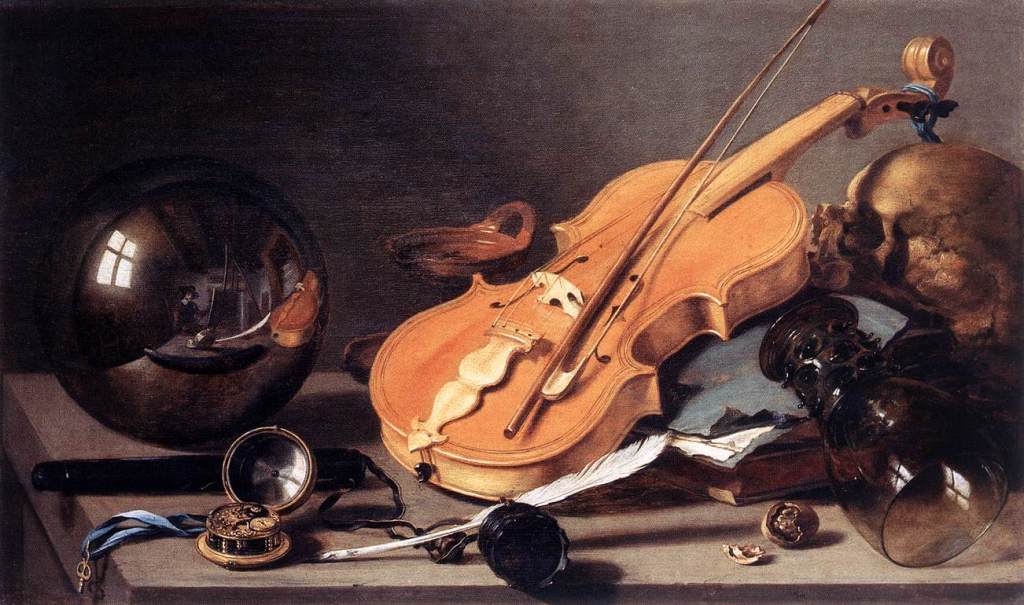
Pieter Calesz – Vanitas with Violin And Glass Ball
A certain symbolism became crucial in conveying the Romantic understanding of our mortality. Skulls, spirits, deities, and even certain animals such as goats and ravens (creatures associated with death and prophecy) recurred in paintings and literature. These symbols, far from being mere morbid curiosities, reminded viewers of life’s fragility and the ever-present shadow of death. They appeared in still lifes, imbued with a melancholic undertone, like “Vanitas with Violin And Glass Ball” – Pieter Calesz, where the skull lurks almost hidden. Still included in the composition, still relevant in the expression of life, but now a bit part. Something in the background. Even some portraits hinted at our mortality such as Charles Émile Champmartin’s fascinating study of another of the Romantic greats – Théodore Géricault On His Deathbed. The natural world, too, was often depicted in decay: crumbling ruins, overgrown graveyards, and tempestuous landscapes reflected the Romantic fascination with the fleeting nature of time. Consider wilting flowers, like roses, symbolizing the ephemeral nature of beauty and life. These symbols weren’t simply about death; they were also about the briefness of life and the inevitability of change, themes that resonate deeply with the black metal aesthetic.
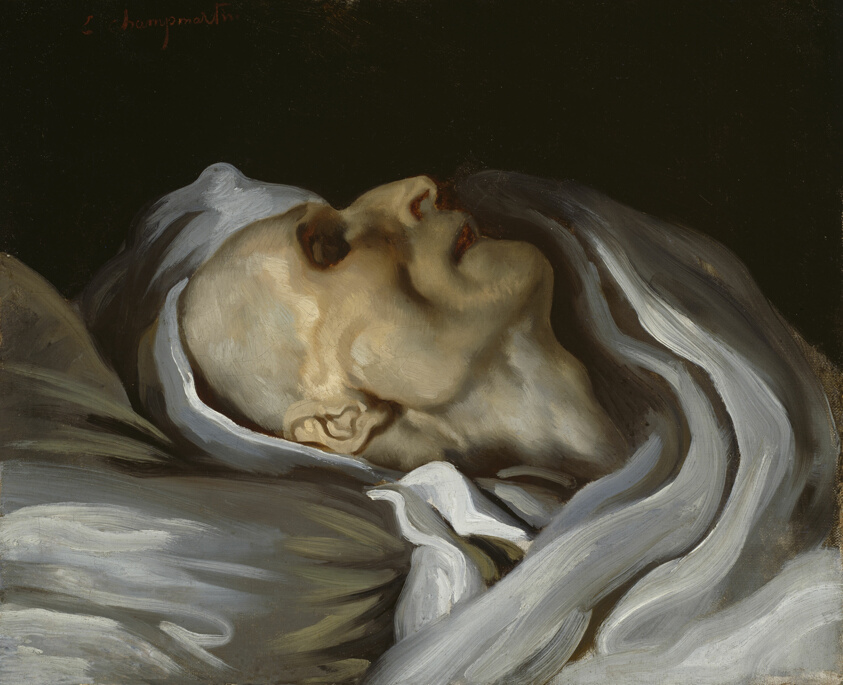
Charles Émile Champmartin – Théodore Géricault On His Deathbed
Romantic artists also directly confronted the spectacle of death. Funeral ceremonies, ghostly apparitions, and portraits of the deceased became subjects of artistic exploration. These depictions weren’t simply morbid; they helped process the complex emotions surrounding death. They captured grief, fear, and uncertainty, but also hinted at acceptance, even a melancholic embrace of mortality. Within the darkness, a flicker of hope often emerged, suggesting something beyond the earthly realm. For example, the dramatic paintings of Eugène Delacroix, like “The Death of Sardanapalus”, depicted scenes of death and destruction with a theatrical flair, reflecting the Romantic fascination with grand emotions and dramatic narratives.
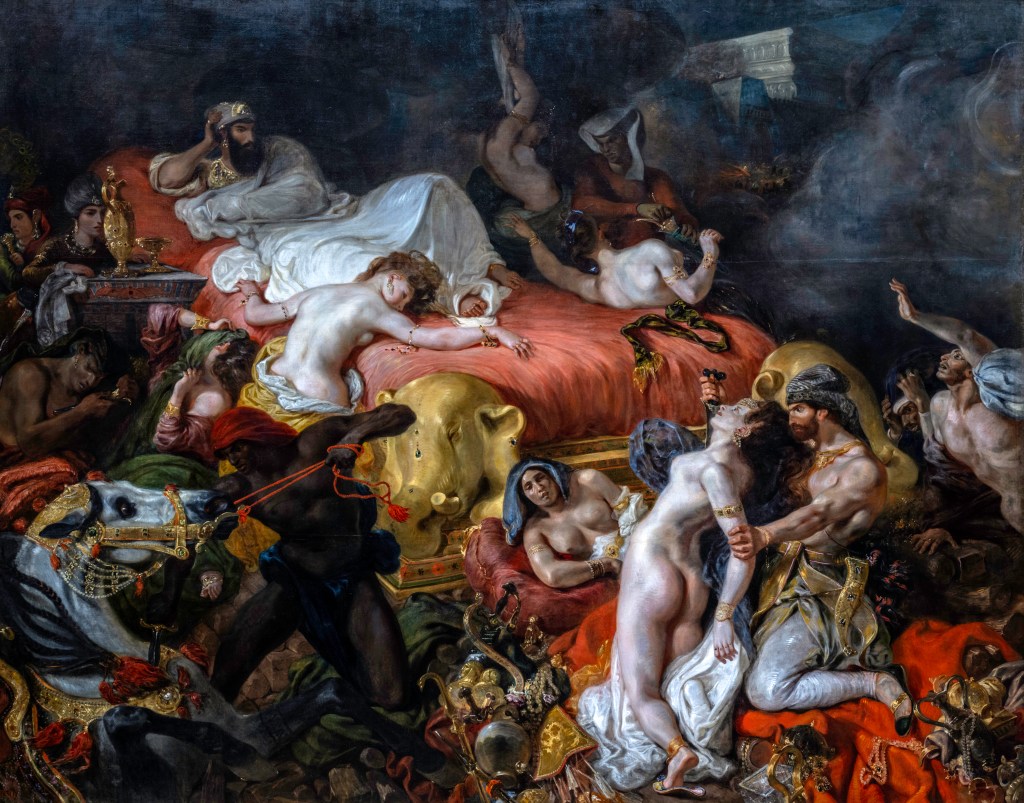
Eugene Delacroix – Death of Sardanapalus
This hope for an afterlife was often conveyed through light and shadow. Romantic paintings frequently used dramatic contrasts between light and dark. This visual language mirrored the emotional landscape, where despair and hope coexisted. Darkness represented anxieties, while light symbolised redemption, spiritual transcendence, or even a literal afterlife. George Roux’s “The Spirit” with its ethereal figure bathed in an otherworldly glow against dim surroundings, exemplifies this, suggesting a spiritual realm. This use of light and shadow wasn’t just a stylistic choice; it reflected the Romantic belief in the power of emotion and intuition, and the search for meaning beyond the material world.
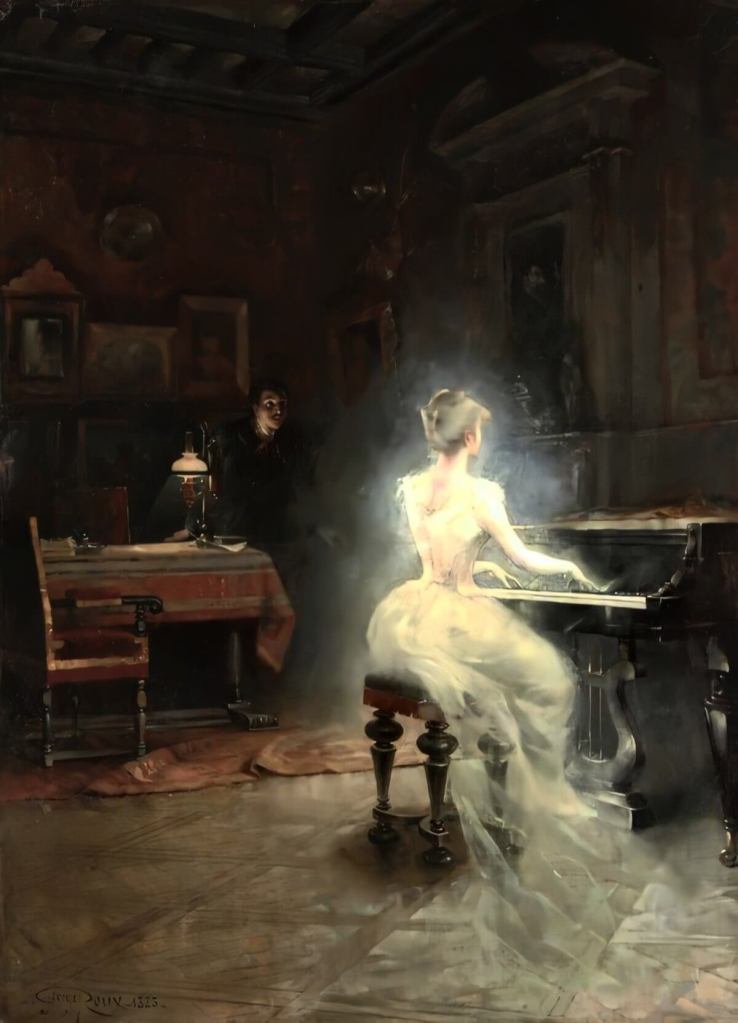
George Roux – The Spirit
The Romantic preoccupation with death and the afterlife wasn’t just personal or artistic; it was a philosophical statement, a response to the Enlightenment. The Enlightenment, emphasizing reason and logic, sought scientific explanations. Mystical and spiritual explanations, including beliefs about the afterlife, were often dismissed. Romantics, while not rejecting reason, sought a more holistic understanding, incorporating emotion, intuition, and the spiritual. They explored what the Enlightenment had ignored, including the mysteries of life and death. This rejection of pure rationalism is mirrored in black metal’s often anti-establishment stance and its embrace of darker, more mystical themes.
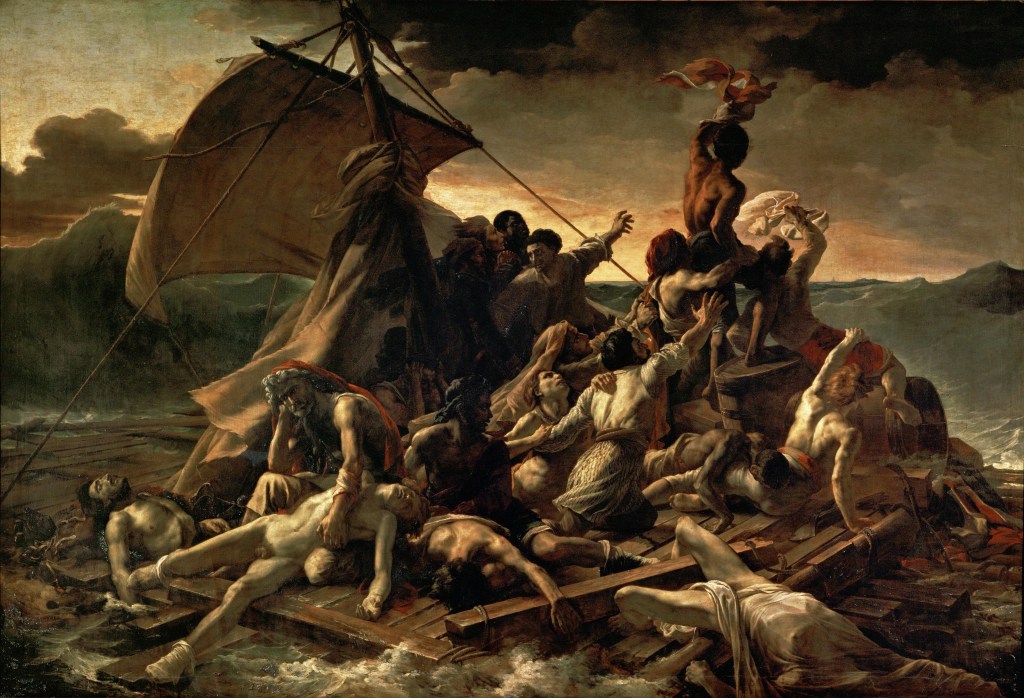
Théodore Géricault – The Raft Of The Medusa
By depicting death in all its forms, from the realism of “The Raft of the Medusa” – Théodore Géricault, to the fantastical horror of “Saturn Devouring His Son” – Francisco Goya, Romantic artists reflected their anxieties and explored the spiritual and emotional dimensions of human experience. They asked big questions about life, death, and what might lie beyond. This exploration of the unknown and spiritual resonates with black metal’s themes. The genre’s fascination with darkness, death, and the sublime finds a clear precedent in Romantic art. Just as Romantics challenged Enlightenment rationalism, black metal often challenges societal norms and explores darker aspects of existence. The raw emotion and sense of the sublime in black metal parallel Romantic artistic expression. Echoes of Romanticism can be heard in bands like Alcest, Agalloch, Ulver, Drudkh, and of course the early symphonic black metal of Dimmu Borgir, Old Man’s Child, whose lyrics and imagery often explore themes of death, nature, and spiritual transcendence. Wolves in the Throne Room’s use of nature imagery, particularly their focus on forests and mountains, evokes the Romantic notion of the sublime – the awe-inspiring and terrifying power of nature. Their music often creates a sense of vastness and mystery, reflecting the Romantic yearning for connection with something larger than oneself.
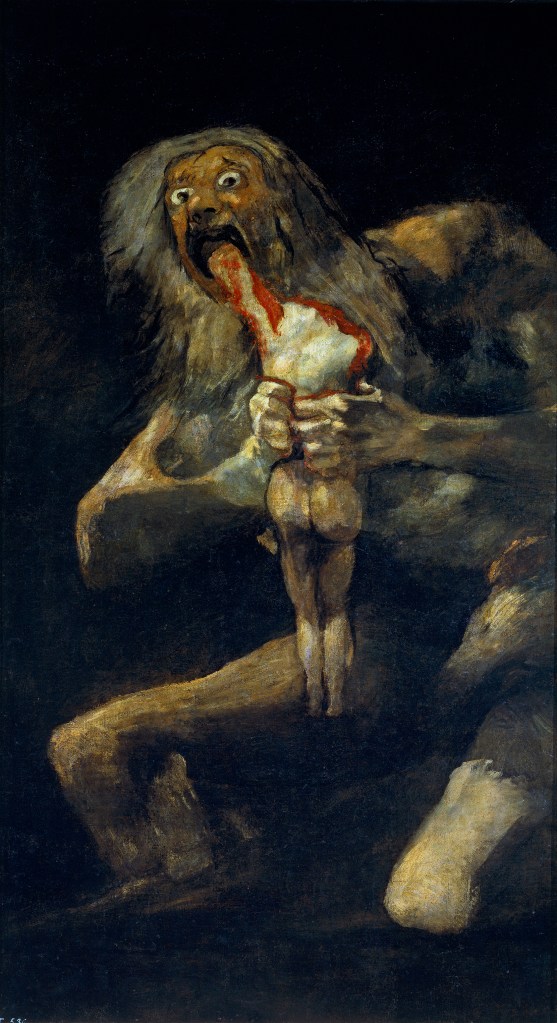
Francisco Goya – Saturn Devouring His Son
The Romantic era also saw a burgeoning interest in the occult and darker spirituality, including Satanism. While not dominant, the figure of Satan, as a symbol of rebellion and forbidden knowledge, held allure for some Romantic artists and authors. This stemmed from rejecting traditional dogma and seeking alternative spiritual experiences. Take Milton’s Paradise Lost. Satan, in this epic tale, wasn’t necessarily pure evil, but a figure of defiance, mirroring the Romantic spirit of individualism. A heroic rebel against the tyranny of reason and society. This interest in the diabolical underscores the Romantic exploration of darker aspects of human experience, challenging conventional morality. Gustave Dore and John Martin took these ideas and used them to produce hundreds of paintings depicting Satan and these new demons. This fascination with the forbidden, like the Romantic interest in death, finds a modern echo in some black metal, where Satanic imagery and anti-Christian sentiments express similar themes of rebellion. This is clearly evident in the music and lyrics of bands like early Cradle of Filth, whose theatrical and often controversial use of Satanic imagery challenged societal norms and explored darker aspects of human experience.
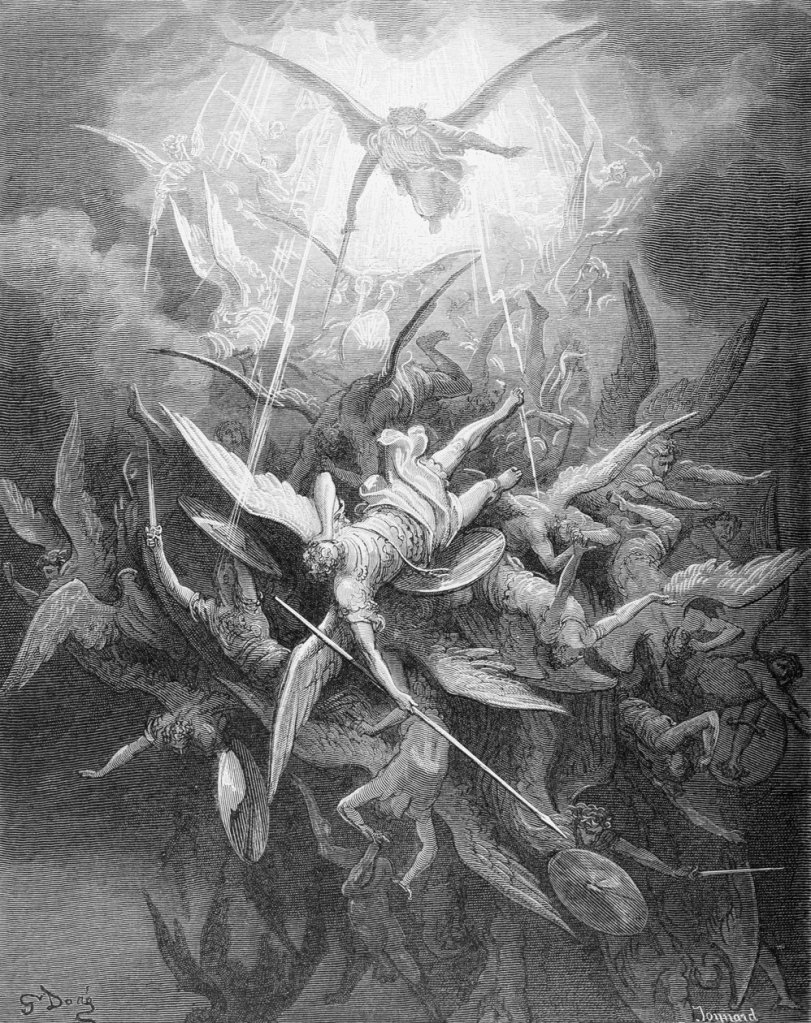
Gustave Dore – The Fall Of The Rebel Angel
The inclusion of these subjects in Romantic art was more than a trend. It was a profound exploration of the human condition, a reflection of anxieties, and a statement against Enlightenment rationalism. Through symbolism, depictions of mortality, and light and shadow, Romantic artists grappled with the mysteries of life and death, leaving a legacy that resonates with those who seek meaning in the darker corners of human experience, including black metal enthusiasts. The Romantic exploration of death and darker spirituality reminds us of the enduring human fascination with mortality and the search for meaning in the face of the unknown. This enduring fascination is precisely what connects Romanticism and black metal across the centuries. Both explore the same fundamental questions about existence, mortality, and the human relationship with the sublime.
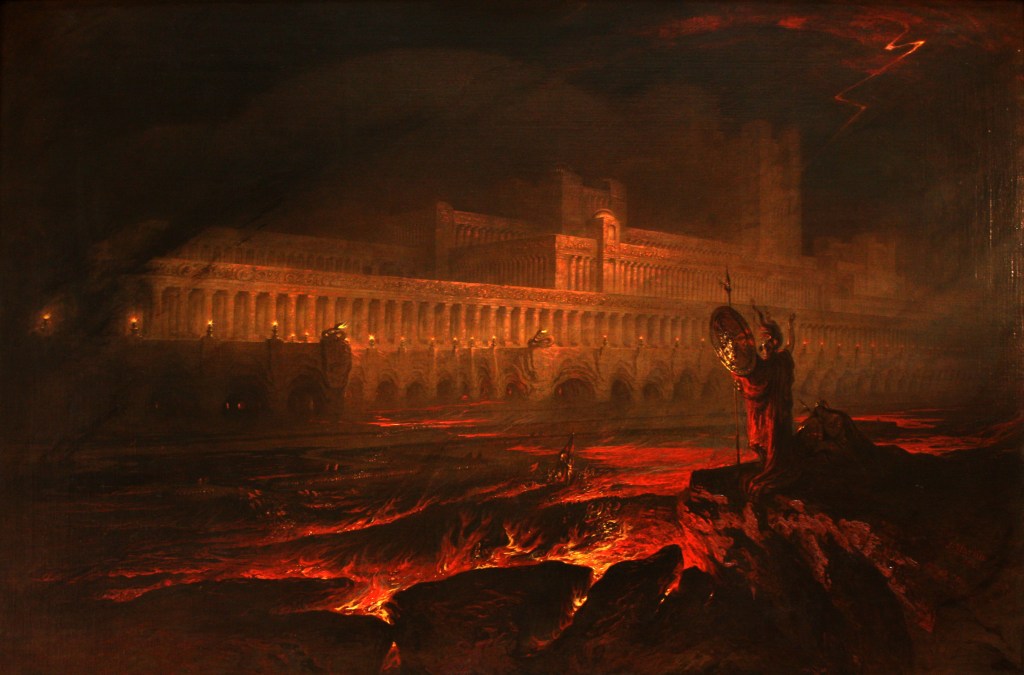
John Martin – Pandemonium
Article by Zero, February 2025.


 Mithraic Magazine
Leave a reply to Speaking Corpses: Decoding Death in Ancient Ritual – Exploring Cody Dickerson’s “The Language Of The Corpse” – Mithraic Magazine Cancel reply