This month in D’s hot takes, we’re asking can anything remain ‘real‘, or do extreme music genres simply follow a cycle and always devolve into imagery over authenticity in the end?
Black Metal v Drill: Can Any Genre Founded On Violence And Murder Stay Authentic To Its Roots?
In the landscape of contemporary music, two of the most controversial and uncompromising genres – black metal and drill – may sit at opposite ends of the sonic spectrum, yet both seem to follow the same inevitable path that all extreme subgenres eventually tread.
While audibly distinct, with black metal being a raw, high-speed assault of tremolo-picked guitars and shrieking vocals, and drill being a bass-heavy, murder-focused evolution of hip-hop – their thematic and cultural underpinnings reveal certain parallels. Both genres grew from the underground, thrive on rebellion, and pride themselves on their authenticity. Yet, as the years progress, both also now struggle with an identity crisis after entering the mainstream – which leads us to the question of this article, can any genre founded on violence and murder really stay authentic or ‘extreme‘ over time?
As most our readers probably already know, black metal originated in the 1980s and early 1990s, primarily in Norway, as an extreme offshoot of heavy metal. Pioneered by bands such as Mayhem, Burzum, and Emperor, it was not only a musical movement but also a radical ideological stance against organised religion, mainstream commercialisation, and conformity. The genre’s aesthetics (corpse paint, lo-fi production, and thunderous compositions) were deliberately designed to create an aura of otherworldly hostility. Although, it is perhaps most infamous for being the first music genre to bring capital crimes, such as murder, to the mainstream.
Drill music, on the other hand, is more recent emerging in early 2010s Chicago, and was shaped by artists like Chief Keef, Lil Durk, and L’A Capone. Like wildfire, drill quickly spread to the UK and beyond, evolving into regional variations with distinct sounds that took drill from a fringe subgenre to a heavyweight of rap culture. Lyrically, drill music is rooted in the realities of street life, gang culture, and of course, unadulterated violence accompanied to menacing beats. Like early black metal, drill music has been met with moral panic and attempts at censorship by the authorities due to its perceived glorification of criminality and violence.
Let’s begin at the origin point: Euronymous, the guitarist of Mayhem and one of the most infamous figures in Norway’s early black metal scene. His ideology, aesthetic, and uncompromising views on music and anti-commercialism made him both a defining and divisive presence who embodied the essence of black metal’s rejection of mainstream culture, promoting a DIY ethic, and fostering an underground movement that thrived on extremism. However, his legacy is forever entangled with the violence that surrounded the early black metal scene, forever immortalised with black metal’s most infamous photograph, and sealed by his own brutal murder at the age of 25.
The infamy of Norway’s second wave of black metal was undoubtedly heightened by its association with church burnings, murder, suicide, and vehement anti-religious ideology. So, while it’s true that bands like Absurd went as far as using the tombstone of a child they murdered as an EP cover, it’s fair to say the most infamous acts in black metal largely belong to the previous millennium. Drill, by contrast, is only just beginning to mellow – its most violent chapters still fresh in the cultural memory. In that sense, drill has become the ‘new black metal‘: the latest lightning rod for public outrage over music that dares to echo or embrace the extreme.
To illustrate the point, if we look at the stories of Rondonumbanine and L’A Capone of Team 600, who were two key figures in the early Chicago drill scene, and who gained recognition for their raw storytelling and aggressive lyricism in the early 2010’s. Their music encapsulated the harsh realities of street life and they developed a large audience due not only to their music but due to the brazen antics of Team 600 affiliates both on and off record. Like Euronymous, Rondonumbanine and L’A Capone were defining artists within the genre’s early days, representing the unfiltered, unapologetic nature of the disenfranchised youth of that era. However, both their careers were cut short when L’A Capone was murdered, and then Rondonumbanine would get a life sentence for a different murder, both aged just 17.
Their stories, much like Euronymous’, reflects the blurred line between art and the real-life violence that surrounded them. Of course, it was that ‘realness‘ and their individual authenticity that partially propelled these genres to the heights they are today (not that many of the founders of either genre would live long enough to see it.)
Now, the point of this article isn’t to say one genre is more ‘real‘ or ‘authentic‘ than another, it actually poses a bigger question. That is, are these cycles of extremity, that rises from within subgenres from time-to-time, always bound to fall into a similar pattern of timidity and commercialisation in the end?
Because that’s exactly what seems to be unfolding here, a familiar cycle repeating itself across different genres, separated by decades but eerily similar in pattern. Both black metal and drill have gone through periods marked by intense, real-world violence, making it pointless to argue which was more dangerous. The more compelling question is whether any genre born from such extremes can truly sustain itself without eventually softening, commercialising, or collapsing under the weight of its own intensity.
Abzsav’s Tables Turn 2.0 – maybe the most disrespectful song ever recorded. If the UK slang is too much, FBG Duck died for this song, and probably this one too.
As mentioned, up until very recently, drill artists weren’t just referencing death and destruction in an abstract or exaggerated way: they were the perpetrators, speaking directly about the murders they, or at least their gang, were involved in. And the proof it’s not all imagery? You can start with Suspect, Kay-O, Rondanumbanine, Lil Durk, and honestly the list goes on – I would be here all day listing all the drill rappers who are currently in prison for murder.
The sheer level of raw, unfiltered violence in early drill appears unsustainable given now how many people openly track and report on gang activity as if they were commentating on sports teams, it seems unlikely now someone like King Von could jump on Twitter and self-snitch about shooting people without facing some sort of repercussion.
It’s impossible to ignore how closely the early 2010’s mirrors the most extreme moments of early black metal, when figures like Varg Vikernes of Burzum openly glorified, and even engaged in, acts of real-world violence nearly two decades earlier.
Burzum’s Aske – album art is a photo of the 1’000 year old church Varg burned, released on the label of the man he would murder in the same year it was released.
Yet because of this inherently unsustainable nature, both genres have, over time, grappled with preserving their credibility amid creeping commercialisation. Black metal (once positioned in direct opposition to the mainstream) began to lose its ideological edge as it was absorbed into the broader music market. Despite the early ’90s Norwegian scene being staunchly anti-commercial, the genre’s growing popularity led some bands to adopt a more polished, accessible sound to reach a larger audience. As major labels took interest and production values increased, the raw aesthetic and underground authenticity that once defined black metal gradually began to erode.
Similarly, drill music’s ascent from the streets of Chicago to global chart success brought its own crisis of authenticity. As prominent artists signed major deals and mainstream acts began adopting the genre’s stylistic hallmarks, critics questioned whether drill had become more of a performance than a true reflection of street realities.
To illuminate the point about mainstream adoption, it is perhaps no coincidence that Ed Sheeran (a figure firmly rooted in pop) has now collaborated with both Cradle of Filth and Central Cee – which is probably the proof that both black metal and drill have been accepted into the wider mainstream despite their murderous origin stories.
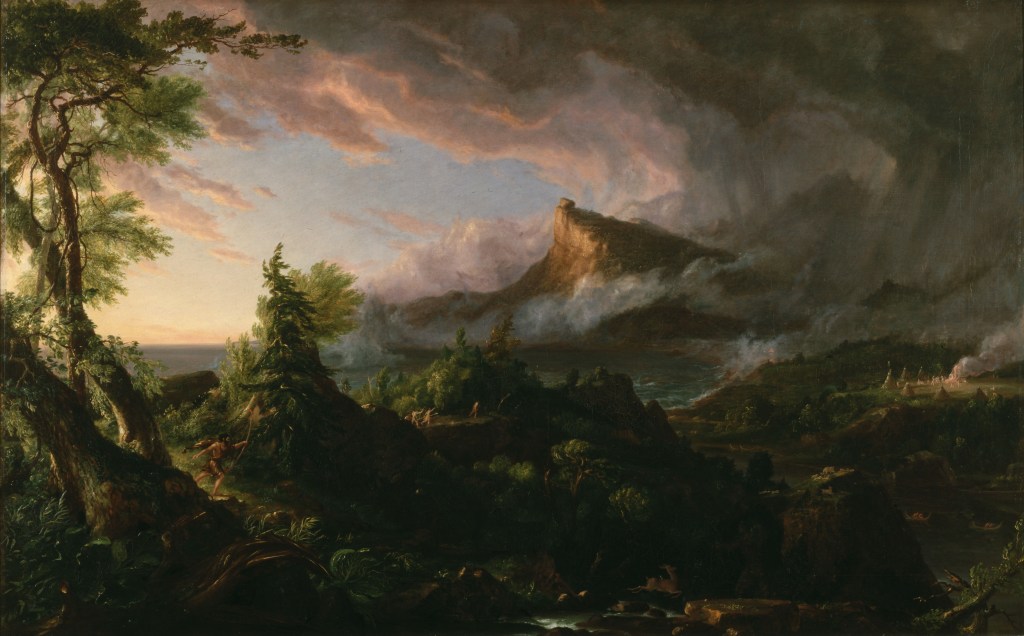
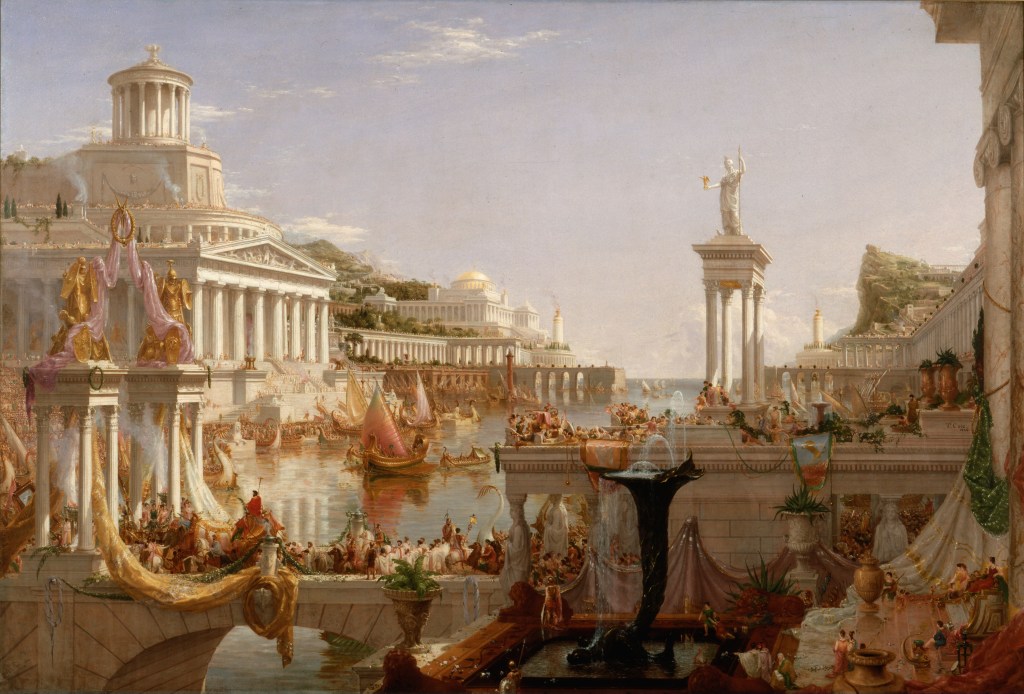
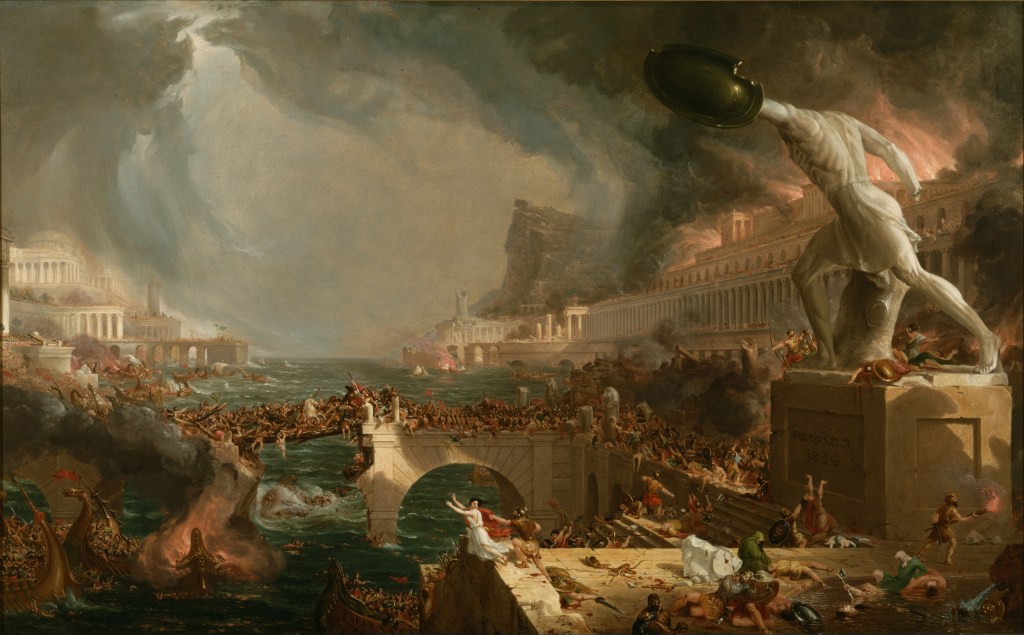
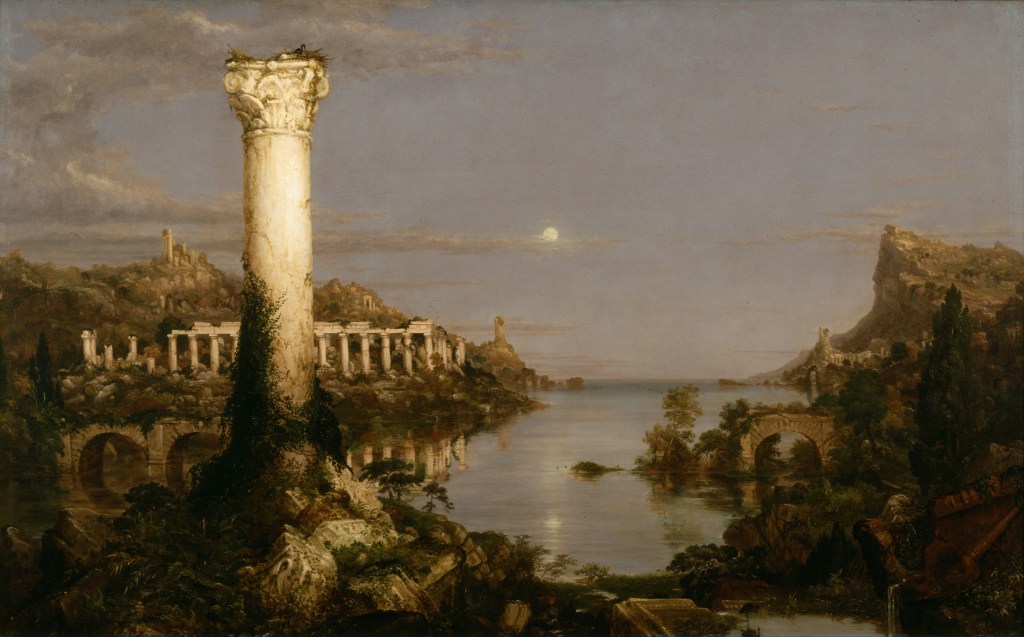
Much like how Thomas Cole’s The Course of Empire depicts the rise and fall of civilisations, extreme music genres seemingly follow a similar, inevitable cycle. In the beginning, its raw energy is driven by real danger – by individuals who live, and sometimes die, by the ethos they express. But as notoriety grows, so does outside interest which inevitably dilutes the genre from its authentic and dangerous roots to a more passive but marketable and mainstream product. By now, the true extremists are mostly either dead, imprisoned, or have self-destructed, leaving behind only those who commodify the aesthetic without embodying the philosophy that defined its origins; stripped of its original menace, repackaged for mass consumption, and mostly reduced to mere spectacle rather than a genuine force of chaos.
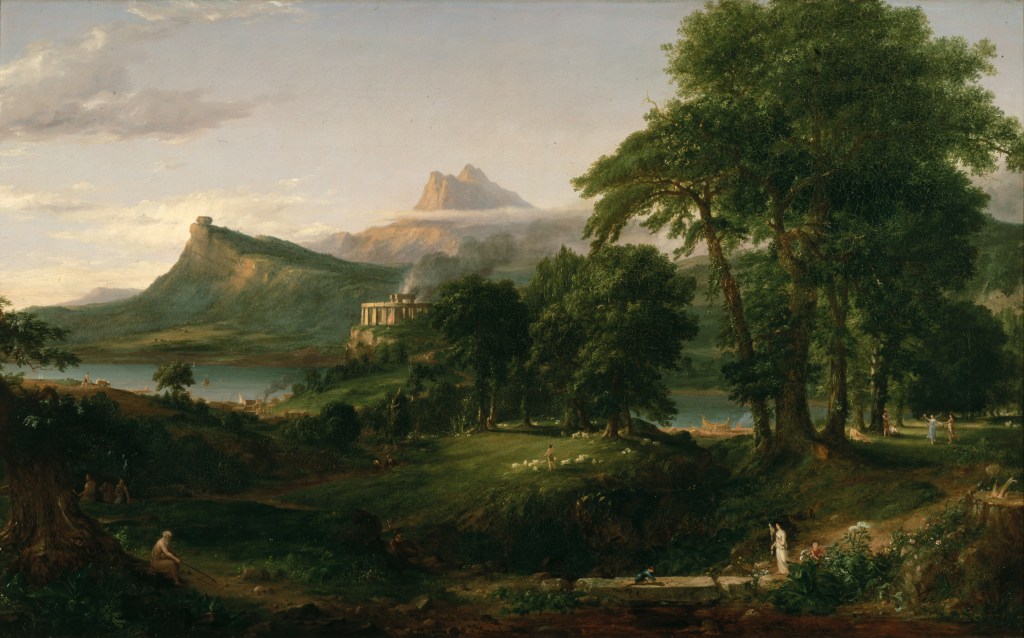
Of course, pockets of authentic music will always remain, and it is entirely subjective as to whether a certain level of authenticity even matters to you. Personally, I still have some standards, but the artists committing crimes is not one of them.
To answer the question, are music genres this extreme sustainable? Probably not. As these genres get larger there will inevitably be more interest from the authorities and pressure from local governments to halt them. But more importantly, is that most people like the idea of chaos but can only enjoy it cathartically; they’re not willing to move into South Side, Chicago, or a Sao Paulo favela.
So, when these extreme and authentic genres emerge, revel in them while you can, for they cannot sustain themselves in their most extreme forms; raging with such ferocity that they either burn out or grow so large outside forces come together to extinguish them. Unable to sustain their intensity, they all eventually dim to an ember just hot enough to be dangerous, but not so dangerous that anyone is actually scared of it.
Ultimately, it is the controversy which drives its appeal but also slowly begins to imprison it’s founders and the cycle continues. People like the idea of danger, but only in the Platonic sense: they aren’t ready to commit to it, and definitely not ready to get fucked by it. If that danger wasn’t commodified for a mass market, they wouldn’t be able to tolerate it; and that’s why the best black metal artists often have less than 5’000 plays, and why no one has ever bought the EP of the most technically gifted drill rapper, as sadly, that’s just not how music works.
That said, as long as violence remains the human default and entropy a universal constant, I’m sure there will always be a new extreme forming somewhere – a new raw, unfiltered voice for the disenfranchised to channel their frustration, likely getting darker and more radical each time it reappears.
Of course, whether you’ll have grown out of being able to bask in that chaos by then is anyone’s guess, as that seems to be another cycle entirely.
But that’s another discussion, for another time.
BOSTKTB,
HTBLOF.
-D


 Mithraic Magazine
Leave a reply to Meshuggah: The Most Black Metal Band To Never Play Black Metal – Mithraic Magazine Cancel reply